 By
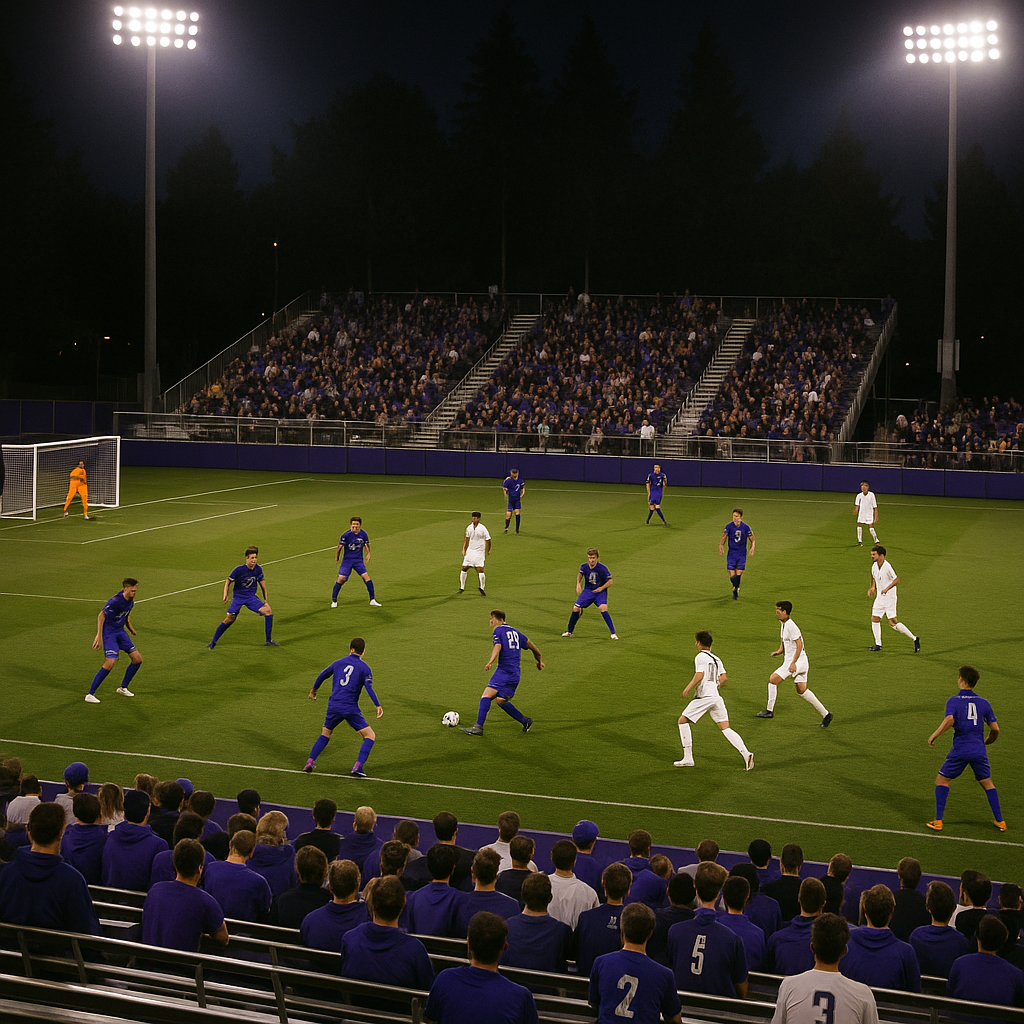
ByIf you’ve watched the Huskies under the lights at Husky Soccer Stadium, you know it feels different. The tempo, the pressing triggers, the constant tactical tweaks—there’s a reason top MLS and international scouts make the trip to Seattle. In this University of Washington NCAA Soccer Analysis: How the Huskies Compete at an Elite Level, we’ll break down the specific decisions, structures, and habits that have turned Washington into a perennial national contender—and, more importantly, show you how to apply those same principles to your own playing, coaching, or analysis journey. Table of Contents
-
The Strategic Foundations of Husky Soccer
-
Tactical Identity: University of Washington NCAA Soccer Analysis on
-
Recruiting, Development, and Data: Building an Elite Husky Roster
-
Training Ground Standards: Turning Concepts into Competitive Habits
-
Applying Husky Principles to Your Career or Program
-
Bringing Husky-Level Standards Into Your Own Game
Key Takeaways Key Idea Why
It Matters How You Can Apply It Clear tactical identity built around pressing and verticality Provides consistency under pressure and against top opposition Define 2–3 non-negotiable principles for your team or personal game model Data-informed recruiting and player development Minimizes misses and accelerates growth of high-potential players Track your own metrics (GPS, video, simple KPIs) and use them to guide training Training sessions that mirror game intensity and decisions Bridges the gap between theory and performance on match day Design practices around realistic scenarios, constraints, and specific roles
1. The Strategic Foundations of Husky Soccer
When you dive into any serious University of Washington NCAA Soccer Analysis: How the Huskies Compete at an Elite Level, you quickly see that success in Seattle isn’t an accident. It’s the product of a long-term strategic vision that connects recruiting, tactics, and training into one coherent system. Washington doesn’t simply gather talent; it curates profiles that fit a clear style of play and a demanding culture. That’s a huge difference from many programs that chase rankings or short-term results without a unifying plan. How to Break Into NCAA College] At its core, Washington’s approach blends high-tempo, physically robust soccer with nuanced positional play. The team values intensity, but not chaos. The staff asks: How do we control the most important spaces on the field? How do we turn defensive pressure into attacking advantages within seconds? And how do we recruit players who can handle those tactical and physical demands while still progressing academically at a top university? This alignment between values, game model, and recruiting criteria is what keeps the Huskies consistently competitive. [7 Ways MAC Hermann Trophy Finalists] For players, parents, and even business professionals following the game, this is a powerful blueprint. You might not be building a Pac-12 powerhouse, but you absolutely can build a personal or organizational “soccer strategy” the same way. Think of your own development or your team the way Washington thinks of its program: as a long-term project where every decision—from schedule planning to role definition—should reinforce a clear identity. That’s how you stop reacting and start building. College Soccer Coaches Poll: 4 Powerful] If you’re still mapping your path into the college game, you’ll see many of the Husky principles echoed in broader guides like “How to Break Into NCAA College Soccer: A Step-by-Step Guide” on College Touchline. Combine that type of structured pathway thinking with the Husky model we’re analyzing here, and you’ll have a much clearer sense of what top-tier programs actually look for. [10 Smart Ways Busy Professionals Can
-
Long-term program identity over short-term patchwork solutions
-
Recruitment aligned to tactical and physical demands
-
Culture focused on intensity, accountability, and adaptability
-
Integration of academics, development, and on-field performance
Pro tip: Write a one-page “program identity” for yourself or your team. Include your preferred style, non-negotiable values, and the player profiles that fit. Revisit it every three months to stay aligned, just like an elite staff would.# 2. Tactical Identity: University of Washington NCAA Soccer Analysis on
How the Huskies Control Games
From a tactical standpoint, the University of Washington has become known for a flexible but clearly defined identity. In most seasons under their current leadership, the Huskies favor a back three or back four that can morph in possession, aggressive wingbacks or fullbacks, and a midfield that can press, cover huge distances, and play forward quickly. You’ll often see them use calculated high pressing in certain phases, then drop into a compact mid-block to funnel opponents into predictable channels. They’re not dogmatic about formations; they’re very strict about principles. NCAA vs NAIA vs JUCO Soccer:
One of the key themes in any serious University of Washington NCAA Soccer Analysis: How the Huskies Compete at an Elite Level is their use of verticality. Washington wants to progress the ball quickly when the opportunity arises, especially through diagonal switches and direct runs off the ball. That doesn’t mean aimless long balls. It means recognizing when the opposition’s structure is unbalanced and using quick, decisive actions to exploit it. The back line and defensive midfielders are encouraged to break lines consistently, but with clear risk management rules. Generation Adidas College Prospects: 7 Data-Driven
Defensively, Washington’s pressing triggers are advanced. They press on poor touches, back passes to weaker-footed center backs, and when teams play into wide areas with their back to goal. The goal is not just to win the ball—it’s to win the ball in zones where the next pass can become an immediate chance. This is very similar to how MAC Hermann Trophy-level players think about the game, which you can see in more detail in “7 Ways MAC Hermann Trophy Finalists Think, Train, and Compete” on College Touchline.
For you as a player, coach, or analyst, the lesson here is to stop thinking purely in formations and start thinking in game principles. Whether you prefer a 4-3-3 or a 3-5-2, what matters is how you want your team to behave in moments: losing the ball, breaking lines, defending wide spaces, attacking in transition. Washington is elite because those principles are drilled, re-drilled, and never left to chance.
Pro tip: During your next match video review, ignore formations. Instead, tag and write down 10 transition moments and 10 pressing moments. Ask: What were the principles? Were they consistent—like Washington’s—or random?
3. Recruiting, Development, and Data: Building an Elite Husky Roster
On the recruiting side, the Huskies operate more like a smart professional club than a typical college program. They identify player profiles early, track them over time, and cross-check live evaluations with data and video. In any University of Washington NCAA Soccer Analysis: How the Huskies Compete at an Elite Level, you have to highlight how ruthlessly focused they are on fit. It’s not just about whether a player is good; it’s about whether that player’s strengths and habits match the Husky way of playing and training.
This is where data becomes a competitive edge. While not every metric is public, it’s clear Washington’s staff cares about repeat high-intensity efforts, pressing actions, and recovery runs just as much as goals and assists. They look for players who can sustain their game model over 90 minutes and across a brutal Pac-12 schedule. This mirrors how Generation Adidas and pro clubs use data to identify prospects, something we dissect further in “Generation Adidas College Prospects: 7 Data-Driven Ways to Identify Future Stars.” The best programs, like Washington, blend the eye test with objective metrics.
Development-wise, Washington doesn’t assume that talent will just “figure it out.” Players are moved into clear role archetypes (ball-playing center back, box-to-box presser, vertical nine, etc.) and given feedback loops based on both staff evaluation and performance data. This approach turns raw upside into refined output, often making Huskies attractive to pro teams. The environment is demanding but also structured enough that players know what improvement looks like and how it will be measured.
If you’re a recruit or a parent, it’s crucial to understand that programs like Washington are evaluating you with this kind of lens. Your highlight reel is just one piece. Your physical data, tactical intelligence, and mentality under stress matter just as much. To stay ahead of the curve, it’s wise to build your own mini “data profile”—track your minutes, key stats, fitness metrics, and video clips over time. Resources like “10 Smart Ways Busy Professionals Can Stay Ahead of College Soccer News and Trends” on College Touchline can help you stay plugged into the evolving landscape while balancing a hectic schedule.
-
Profile-based recruiting focused on tactical and physical fit
-
Combination of eye test, video, and data metrics
-
Structured development plans with clear role definitions
-
Environment designed to prepare players for professional pathways Recruiting Factor What Elite Programs Like Washington Look For How You Can Show It Tactical Intelligence Understanding of pressing, spacing, and role responsibilities Use game clips where you solve problems, not just score Physical Capacity High-intensity repeat efforts, recovery speed, durability Track GPS or fitness test results and show progression Mentality Consistency, response to adversity, coachability Get reference letters and clips that show your response after mistakes Academic Fit Ability to handle rigorous university workload Maintain strong GPA and show time-management skills
Pro tip: Create a one-page “player report” on yourself with 3–5 key metrics (physical, technical, tactical). Update it every 8–12 weeks. This is exactly the kind of longitudinal picture staff at programs like Washington build on you—do it for yourself first.# 4. Training Ground Standards: Turning Concepts into Competitive Habits
You don’t compete in the NCAA Tournament by just talking about tactics—you compete by living them on the training ground every week. The Huskies’ training culture is intense and purposeful. Sessions are built around the exact game moments they want to dominate: counter-pressing after loss of possession, exploiting wide overloads, defending cutbacks, and managing late-game leads. Every drill has a clear objective and a clear link to their game model, which is why their identity shows so consistently on match days.
One thing that stands out in any practical University of Washington NCAA Soccer Analysis: How the Huskies Compete at an Elite Level is how training constraints are used. Washington regularly sets up drills with numerical imbalances, limited touches, or directional rules that force players to solve the kinds of problems they’ll see in Pac-12 play. That means fewer generic possession drills and more scenario-based games where decision-making and intensity are non-negotiable. The staff demands that training runs at or above game speed so that competition feels familiar, not overwhelming.
There’s also a strong emphasis on role clarity in training. The wide center back in a back three has very different responsibilities from the central center back; the pressing nine has different triggers than the supporting ten. Rather than leaving these to chance, Washington uses video, on-field walk-throughs, and targeted exercises to make sure each player knows their role in various structures. For a business professional reading this, you’ll recognize this as elite role definition and process design—the same things that make high-performing teams work in any industry.
If you’re coaching, you can borrow this approach immediately. Instead of planning sessions around vague goals like “fitness” or “possession,” design them around specific game moments and roles. If you’re a player, you can adapt your individual work: recreate situations you struggle with, set time or touch constraints, and evaluate yourself with a coach’s eye. Over time, this turns conceptual knowledge into automatic habits.
-
Identify 2–3 key game moments you want to improve (e.g., counter-pressing, defending crosses).
-
Design or find drills that replicate those exact scenarios under pressure.
-
Add constraints (touch limits, time limits, numerical imbalances) to increase realism.
-
Record portions of training and compare your decisions to match footage.
-
Adjust constraints and roles weekly as you see progress or new weaknesses.Pro tip:* Take one full training week and give every session a one-sentence tactical objective (for example: “Train our forwards’ pressing triggers on back passes”). If you can’t summarize a session like that, it’s probably not specific enough.# 5. Applying Husky Principles to Your Career or Program
So how do you actually use all of this as more than just interesting analysis? The real value of a University of Washington NCAA Soccer Analysis: How the Huskies Compete at an Elite Level is in the translation—taking elite-program principles and applying them to your reality. Whether you’re a player balancing a full-time job, a youth coach running three sessions a week, or a parent trying to guide a motivated teenager, you can borrow the Husky framework and scale it to your context.
Start with clarity. Define your or your team’s identity the way Washington defines theirs: preferred style, key principles, and non-negotiable habits. Then connect your calendar to that identity. Your training sessions, game schedule, and even your college list should reinforce those priorities. For example, if high-pressing and vertical play are your strengths, target programs and showcases where coaches value those qualities. College Touchline’s guide “NCAA vs NAIA vs JUCO Soccer: Which Path Is Best for Your College Career?” can help you align your strengths with the right competitive environment.
Next, think like a staff analyst. Use resources like the “College Soccer Coaches Poll: 4 Powerful Ways to Use the Rankings to Your Advantage” to understand where programs like Washington sit in the landscape and how that affects recruiting, scouting, and scheduling. If you’re a business professional with limited time, the article “10 Smart Ways Busy Professionals Can Stay Ahead of College Soccer News and Trends” offers practical ways to track programs, data, and news without burning out. Staying informed is part of playing the long game.
Finally, remember that elite-level competition is built on thousands of small, boring habits—sleep, nutrition, recovery, film study, communication. Washington’s players don’t just switch on for big games; they live the behaviors that create those performances. You don’t need Pac-12 facilities to adopt those habits. You just need a clear plan, consistent self-review, and a willingness to make incremental upgrades over months and years. You’ve absolutely got this if you approach your development with the same strategic mindset the Huskies use.
Pro tip: Once per month, run a “program review” on yourself or your team: What’s working? What’s not? What would the Huskies’ staff change first? Those honest, structured check-ins are where elite progress starts. Bringing Husky-Level Standards Into Your Own Game
The deeper you go into University of Washington NCAA Soccer Analysis: How the Huskies Compete at an Elite Level, the more you realize this isn’t just about one program in Seattle. It’s a case study in how clear identity, smart recruiting, tactical detail, and relentlessly intentional training can turn a strong team into an elite one. Washington shows that you don’t need to copy a specific formation or favorite drill; you need to copy the underlying mindset and processes.
If you’re serious about the college game—as a player, coach, or dedicated fan—let the Huskies be your template. Define who you are, gather the right people and information around that identity, and build training and decision-making systems that actually reflect your goals. Use College Touchline resources like “How to Break Into NCAA College Soccer” or “7 Ways MAC Hermann Trophy Finalists Think, Train, and Compete” as complementary guides while you craft your own plan.
Most importantly, stay patient and curious. Elite programs like Washington weren’t built overnight, and neither will your journey be. But by steadily applying the lessons from this University of Washington NCAA Soccer Analysis: How the Huskies Compete at an Elite Level, you’ll move from reacting to opportunities to creating them. Keep studying, keep refining, and keep trusting the process—you’re much closer to that elite standard than you think.
Ready to apply Husky-level standards to your own path? Explore more in-depth breakdowns and recruiting guides on College Touchline, then pick one principle from this article to implement in your next week of training, planning, or analysis.