 By
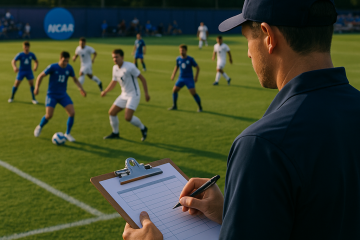
ByIf you only watched the goals on Sunday morning highlight reels, you’d swear NCAA soccer was just about talent and hustle. But when you sit in the stands next to college scouts or on the bench with a staff, you realize something very different: matches are usually decided by tiny tactical edges that casual fans barely notice. This College Soccer Tactics Breakdown: How NCAA Teams Actually Win Matches is your behind-the-scenes tour of those edges, so you can see the game the way top coaches do. Table of Contents
Key Takeaways Key Idea Why
It Matters How You Can Use It Tactics are shaped by NCAA rules and season structure Short seasons, unlimited subs, and overtime rules change how teams press and manage risk Tailor your fitness, playing style, and recruiting choices to programs whose tactics fit you Pressing and transition decide most college games Turnovers and second balls lead to high‑value chances more than slow buildup Train your decision-making under pressure and study pressing triggers to stand out Set pieces and data analysis are massive competitive edges Well-coached programs squeeze 5–10 extra goals from restarts and analytics Invest in film, tracking your own metrics, and mastering set-piece roles to become indispensable
1. Why NCAA Soccer Tactics
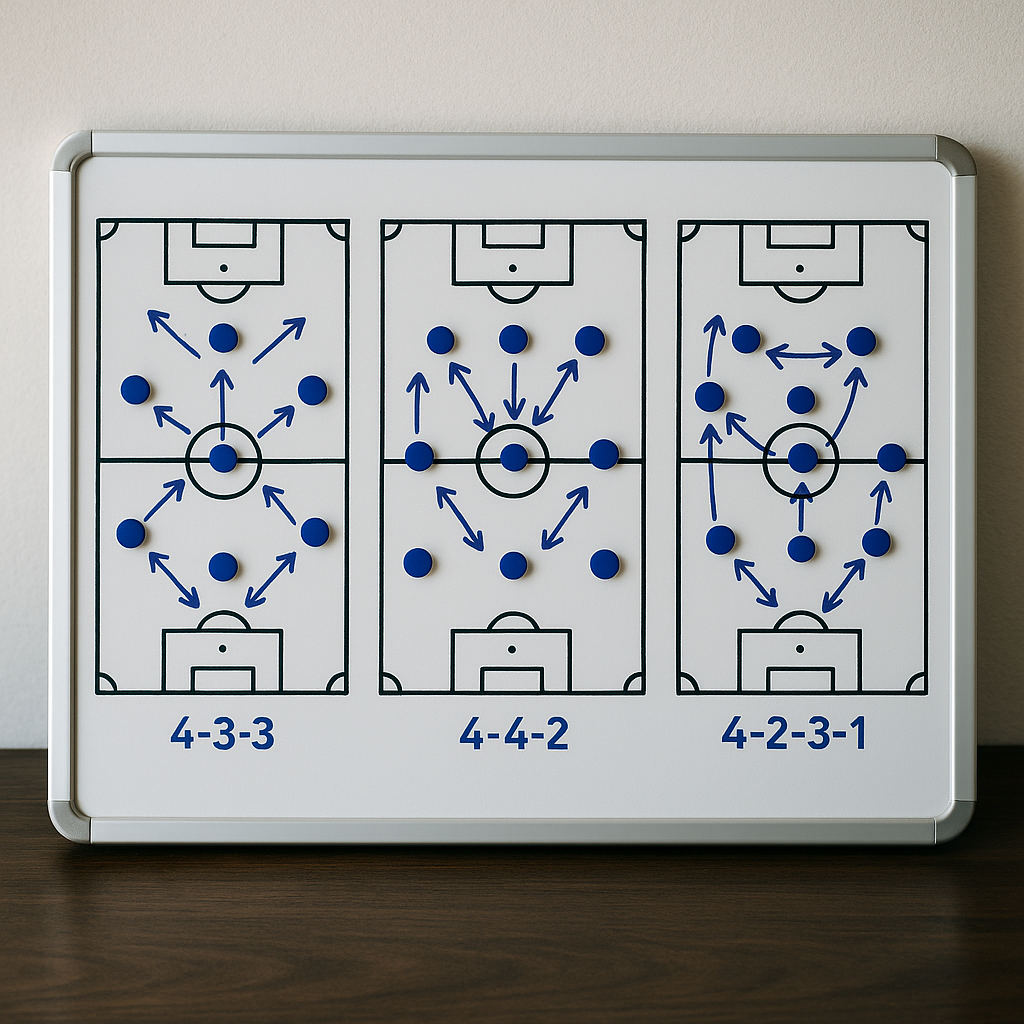
Look Different from the Pros To really understand any College Soccer Tactics Breakdown: How NCAA Teams Actually Win Matches, you first need to accept one truth: NCAA soccer is its own ecosystem. It’s not just “mini MLS” or “slower Premier League.” The rules, calendar, roster sizes, and substitution policies all pull the game in a specific tactical direction. Coaches design game models around these constraints, not in spite of them. When you see a team pressing like crazy for 90 minutes or sending long diagonals instead of patiently circulating, that’s usually a rational response to NCAA realities, not a lack of sophistication. NCAA vs NAIA vs JUCO Soccer:] One of the biggest drivers is the short fall season. Teams might play 18–20 regular-season matches plus conference tournaments and NCAA playoffs in a compressed window. That means less training time between games, more travel, and massive physical load. With unlimited or liberal substitutions, coaches often choose high-intensity, direct styles because they can rotate fresh legs constantly. In a professional environment, that level of pressing would be unsustainable; in the NCAA, it can be a competitive advantage. Read NCAA Soccer Transfer Rumors (And] Roster construction is another factor. Division 1 squads can be large, with 25–30 players fighting for minutes. Tactically, that encourages systems where multiple players can fill similar roles, and where you don’t need a single superstar playmaker to run the entire structure. Many coaches prioritize flexible 4-3-3 or 4-2-3-1 shapes that can easily shift into a 4-5-1 when protecting a lead, or a 3-4-3 when chasing a goal. If you’re comparing pathways like NCAA vs NAIA vs JUCO, understanding how these environments shape tactics can help you choose the best fit for your style and goals, which is exactly what we unpack in more detail at collegetouchline.com University of Washington NCAA Soccer Analysis:
Finally, overtime rules and the “win-or-go-home” nature of college playoffs push coaches toward pragmatic decision-making. You’ll see more late-game time management, safer choices in the defensive third, and targeted risk in specific moments—like pressing after throw-ins or free kicks in the attacking half. When we talk about a College Soccer Tactics Breakdown: How NCAA Teams Actually Win Matches, we’re really talking about how the best staffs navigate risk under a unique set of rules and pressures that you won’t find in most pro leagues. Generation Adidas College Prospects: 7 Data-Driven
-
Short, intense seasons reward physically demanding styles
-
Larger rosters encourage flexible, plug-and-play systems
-
Substitution rules support aggressive pressing and tempo shifts
-
– Overtime and playoffs increase tactical pragmatism late in games Feature NCAA Division 1: Typical Pro League Tactical Impact
-
Substitutions Liberal, re-entry allowed (varies by conference): Limited, no re-entry Higher pressing intensity, situational specialists
-
Roster Size | 25–30 players | 20–25 players Broader tactical flexibility, role competition
-
Match Frequency | 2–3 matches per week | 1–2 matches per week More game-specific tactics, less long-term tactical evolution in-season
Pro tip: When you evaluate a program, don’t just watch highlight reels. Watch a full match and track substitutions, pressing intensity, and late-game tactics—you’ll quickly see if their style truly fits how you want to play and develop.# 2. College Soccer Tactics Breakdown:
How Teams Control the Game When coaches talk about control in NCAA soccer, they’re rarely talking only about possession percentages. In practice, control means dictating where the game is played, who is under pressure, and how quickly key moments unfold. This is where the core of any serious College Soccer Tactics Breakdown: How NCAA Teams Actually Win Matches has to start: pressing, defensive shape, and transition. The ball might only be at a player’s feet for a couple of seconds, but the spacing and decisions of the other 20 players determine everything. [7 Elite Principles for NCAA Soccer] Pressing has become the defining feature of many top Division 1 programs. Some teams favor an all-out high press in a 4-3-3, hunting turnovers near the opponent’s box. Others prefer a mid-block, inviting the opposition into central zones before collapsing on the ball. What separates elite programs is how coordinated these presses are: triggers (bad first touch, back pass to a weak-footed center back, backwards throw-in), cover shadows to block passing lanes, and communication to avoid one player sprinting alone. If you watch the University of Washington, for example, you’ll see a great case study in collective pressing and mid-block control, which we break down in detail at collegetouchline.com How to Get Recruited for College] On the ball, NCAA teams usually fall into three big categories: direct vertical, controlled possession, or hybrid. Direct teams try to win territory quickly with long diagonals, knockdowns, and second balls. Possession teams build through the thirds, using fullbacks high and interior midfield rotations. Most winning programs are hybrids: they can play direct against a pressing opponent but slow the game down against low blocks. As a player or analyst, you should be able to identify which category a team is in within the first 15 minutes of a match—it completely changes how you interpret their decisions.
Transition—the moments right after winning or losing the ball—is where NCAA matches often swing. Because of the athleticism and open fields, a single bad touch can turn into a 5v4 the other way in seconds. Top teams script their transition behaviors: immediate counterpress, or drop into a compact shell; aggressive counterattacks down the flanks, or controlled rest defense to avoid getting exposed. If you can see these patterns live or on film, you’re already thinking like a college assistant coach.
-
High press vs mid-block vs low block each change how and where the game is decided
-
Direct vs possession vs hybrid styles influence recruiting and player profiles
-
Transitions are often more decisive than slow, organized attacks
-
Pressing triggers and cover shadows are key to sustainable high-intensity tactics Game Model Typical Formation Strengths in NCAA Context Common Risks High Press & Direct | 4-3-3 or 4-2-3-1 | Creates turnovers high, suits deep rosters and athletic squads Can be exposed by calm, technical back lines |
| Mid-Block & Hybrid | 4-4-2 or 4-1-4-1 | Balances energy, strong in transition both ways Requires intelligent midfielders who read cues |
| Possession-Heavy | 4-3-3 or 3-4-3 | Controls tempo, tires opponents mentally Risk of turnovers in build-up, requires high technical floor |
Pro tip: Next time you watch a match, pick one team and focus ONLY on their behaviors for 5 seconds after losing the ball. Write down what you see. You’ll immediately start noticing patterns that most players never think about—and coaches love players who see those patterns.# 3. College Soccer Tactics Breakdown:
How NCAA Teams Actually Create and Prevent Goals Most fans notice goals; few notice the repeatable patterns that produce them. In any serious College Soccer Tactics Breakdown: How NCAA Teams Actually Win Matches, we have to look past highlight moments and zoom in on chance creation models and defensive principles. The best NCAA staffs run their attack like a playbook: specific movements to create overloads, isolate a dominant 1v1 winger, or free a late-arriving midfielder at the top of the box. If you’re a business-minded reader who loves systems and processes, this is where college soccer starts to look like a high-performance organization more than a simple sport. Chance creation usually revolves around three engines: wide overloads and crosses, central combination play, and transition attacks. Wide overloads are the most common: fullback overlaps, winger inside, and #8 or #10 arriving in the half-space. From there, teams look for cutbacks, driven low crosses, or far-post runs. Central combinations are less common because NCAA midfields are often very congested, but top technical teams will use third-man runs and quick wall passes to break lines. Transition attacks—winning the ball and going forward immediately—are critical, especially late in games when legs are heavy and spacing is stretched.
Defensively, elite teams are quietly obsessed with three things: protecting the zone in front of center backs, defending the back post, and controlling second balls. If you’ve read our deep dive on backline defending at collegetouchline.com you know that NCAA goals often come from lapses in these areas rather than brilliant attacking play. Coaches drill their back lines to shift as a unit, keep compact distances, and coordinate with the holding midfielder to deny central shots. At the same time, they script how to defend crosses: near-post clearance, central screen, and back-post marking are all assigned roles, not just “mark your man.”
Set pieces are the not-so-secret weapon. Corner kicks, free kicks, long throws—these are gold in NCAA soccer. The best programs treat them like American football playbooks, with rehearsed routines tailored to their personnel. Near-post flick-ons, stacked runs from the penalty spot, decoy short corners, or far-post screens are all ways to squeeze extra goals out of static situations. Over a season, well-coached set pieces can be the difference between making the NCAA tournament or staying home.
-
Wide overloads and cutbacks are a primary source of open-play goals
-
Central combinations require high technical quality but can slice through compact blocks
-
Defensive priorities: protect zone 14, back-post, and second balls
-
Set pieces act as a built-in “goal factory” for organized programs Situation Common NCAA Tactic Key Coaching Focus Practical Player Adjustment Wide Attacks Overlap/underlap and cutback Timing of runs and zone targeting Arrive late at top of box instead of ball-watching in the 6-yard area Defending Crosses Zonal/Man hybrid in the box Back-post marking and clearances to safe zones Check your shoulder early and clear wide, not central Attacking Corners Near-post flick or crowding keeper Blocking, screens, and run coordination Commit to your run pattern even if the ball rarely finds you Defensive Set Pieces Zonal line with man-marked threats Winning first and second contacts Attack the ball with conviction and react first to loose rebounds
Pro tip: If you want to become tactically invaluable, learn two things: 1) exactly where your coach wants you to be on cutbacks and crosses, and 2) your roles on every set piece—both attacking and defending. Mastering these adds goals and saves to your personal “value sheet” immediately.# 4. Adjustments, Data, and Film:
The Hidden Edge in College Soccer From the stands, it can feel like college matches are decided purely by emotion and momentum. But in most Division 1 environments, there’s a quiet layer of analytics and adjustment happening behind the scenes that deserves its own place in any College Soccer Tactics Breakdown: How NCAA Teams Actually Win Matches. Staffs cut film, tag events, and build simple data dashboards to answer questions like: Where are our turnovers happening? Which pressing triggers are actually generating interceptions? Which set-piece routines are underperforming expected goals? In-game, the best coaches use this information to make targeted adjustments. At halftime, you’ll often hear staff talk in very specific terms: shift the pressing trap five yards wider, change the trigger from center back touches to passes into the #6, or flip wingers to exploit a weaker fullback. Mass subs aren’t random—they’re often tied to tactical mini-plans: one group to press and chase a goal, another to protect a lead in a compact block. If you’ve followed our piece on reading transfer rumors at collegetouchline.com you know staffs are just as strategic about building rosters to fit these game models. Off the field, film is where players quietly separate themselves. Staffs notice the athletes who ask for clips, track their own mistakes, and come to meetings with specific questions. Business professionals reading this will recognize the pattern: the players who treat film like a sales pipeline review—identifying patterns, bottlenecks, and conversion points—tend to make faster tactical jumps. Whether you’re evaluating your own play or scouting opponents, you can use film to reverse-engineer their tactical identity: pressing shape, transition behaviors, set-piece patterns, and substitutions by game state.
Data doesn’t have to be complicated. Many NCAA staffs start with simple metrics: shots from the “golden zone” (center of the box), set-piece expected goals, passes completed into the final third, and pressing regains in the attacking half. Over time, these stats guide training priorities and tactical tweaks: more rondos to reduce central turnovers, different corner routines to exploit aerial mismatches, or adjusted pressing traps to force opponents into low-value passes. You don’t need full tracking data to gain an edge; consistent, simple tracking plus honest film review is already a huge step ahead of the average player or fan.
-
Halftime adjustments focus on small, repeatable tactical shifts
-
Film review turns vague “play better” feedback into specific action steps
-
Simple metrics can guide training priorities and set-piece design
-
Rosters are increasingly built to match clear tactical game models Tactical Tool How NCAA Staffs Use It Example Metric Actionable Outcome Film Tagging Label presses, turnovers, chances Turnovers in own half Add extra build-up drills under pressure in training Set-Piece Analytics Track chances and goals per routine xG per corner routine Drop low-yield patterns, double down on most effective ones Pressing Data Measure success of pressing triggers Regains in attacking third Adjust pressing line or triggers to increase turnovers Substitution Patterns Map performance by minute and role Expected goals for/against by rotation Design specific “closing lineups” for protecting leads
Pro tip: Create a simple post-game review template for yourself: 1) three good tactical decisions you made, 2) three situations you misread, 3) one recurring pattern you noticed. Do this consistently for a month and your tactical awareness will jump more than any single training session.# 5. Turning Tactical Knowledge into Career Advantage Understanding
this College Soccer Soccer Tactics Breakdown: How NCAA Teams Actually Win Matches is great for your soccer IQ, but it’s even more valuable when you turn it into concrete career leverage. For players, tactical clarity helps you pick the right program, communicate better with coaches, and showcase the parts of your game that matter most to the system you’re entering. For business professionals watching from the outside—agents, scouts, corporate partners, or data-minded fans—tactical literacy lets you ask sharper questions and spot undervalued talent or programs. On the recruiting side, knowing what systems you fit can save you years of frustration. A high-pressing 4-3-3 with direct play demands different traits than a possession-heavy 4-3-3 that builds through the #6. When you build your recruiting plan, you want to target schools whose game models match your strengths and development goals. If you haven’t yet, pairing this tactical lens with our step-by-step recruiting guide at collegetouchline.com is a powerful combo—you’ll reach out to fewer programs, but with much higher fit and success rates. For those eyeing the professional pathway, tactical understanding matters even more. MLS, USL, and overseas clubs increasingly use data and film when identifying players, including those on the Generation Adidas track. If you’ve read our piece on identifying Generation Adidas college prospects at collegetouchline.com you know that tactical adaptability, set-piece value, and decision-making under pressure are key filters. The more fluent you are in college tactics, the faster you can translate your game to pro demands and communicate your value to scouts and technical directors.
Even if you’re simply a passionate fan or a busy professional following the game between meetings, tactical literacy makes matches more enjoyable. Instead of just reacting to goals, you’ll start predicting them—spotting matchups, fatigue patterns, and structural advantages before they show on the scoreboard. It’s the difference between glancing at a stock ticker and actually reading a balance sheet. You don’t have to become a full-time analyst; just a bit of structure in how you watch and think about matches goes a long way. And truly, you’ve got this—the learning curve looks steep at first, but every match is another “case study” in your growing playbook.
-
Match your playing profile to programs whose tactics amplify your strengths
-
Use tactical language in emails and calls with coaches to stand out as a mature recruit
-
Track your own data and film clips to present a clear, role-specific value proposition
-
For professionals, use tactics to evaluate programs, coaches, and players like an investor
Pro tip: The next time you talk with a college coach—whether in recruiting or as a current player—ask one simple question: “What’s our game model in possession and out of possession, in one minute?” Their answer will give you a roadmap for what to study, train, and highlight in your own development. Bringing Your College Soccer Tactics Breakdown
to Life You’ve just walked through a full College Soccer Tactics Breakdown: How NCAA Teams Actually Win Matches—pressing schemes, game models, chance creation, set pieces, film, and data. The key idea tying it all to gether is simple: winning programs don’t just have better players; they have clearer plans. The rules and realities of the NCAA create a unique tactical environment, and the teams that understand that environment best tend to be the ones still playing in November. For you, the real win is applying this lens: watch matches with specific questions in mind, study set pieces like mini case studies, and see yourself as part of a system rather than just an individual. Whether you’re targeting a roster spot, evaluating a potential transfer destination, or simply leveling up your fan experience, this tactical perspective pays off. And remember, it doesn’t require genius—just consistent curiosity and a willingness to see beyond the scoreline. At College Touchline, our mission is to help you do exactly that: see the NCAA game the way decision-makers see it, so you can make sharper choices about recruitment, development, and long-term pathways. Keep exploring the linked guides and analyses, bring your own questions, and treat every match as a chance to test what you’ve learned. Bit by bit, you’ll find yourself predicting patterns before they happen—and that’s when you know you’re really reading college soccer the way coaches do.
If you’re ready to go deeper than this College Soccer Tactics Breakdown: How NCAA Teams Actually Win Matches, start by watching your next NCAA match with one focus—pressing, set pieces, or transition—and then write down what you see. Then head back to College Touchline to compare your notes with our latest tactical breakdowns and recruiting guides.**