
 By
ByMidfielders have always been the engine of any soccer team, but the landscape for NCAA Division 1 soccer is shifting rapidly. As we look toward 2026, the demands on college midfielders are evolving, and so is the way coaches and recruiters assess their value. Decision-making is quickly becoming the most prized asset in a midfielder’s toolkit, eclipsing even pure athleticism or technical prowess. In this deep dive, we’ll unpack why decision-making is so critical for midfielders, how it’s shaping recruitment and coaching, and what players, coaches, and fans should expect in the next era of college soccer.
Why Decision-Making Matters Now More Than Ever

The college game is faster, smarter, and more competitive than ever before. With the rise of analytics and an influx of international talent, NCAA coaches are prioritizing players who can read the game and make intelligent choices under pressure. The midfield, always the brain of the team, is now the focal point for tactical innovation.
Today’s top programs aren’t just recruiting players who can dribble or shoot—they’re searching for midfielders who can dictate tempo, anticipate danger, and unlock defensive lines with a single pass. Coaches know that a split-second decision at midfield can be the difference between winning and losing, especially when margins are razor-thin in tournament play.
Pro tip: When evaluating midfielders, watch not just what they do on the ball, but why they do it. The best decision-makers often make the game look simple—don’t mistake simplicity for passivity.
The Science of Split-Second Choices
Let’s break down what “midfielder decision-making” really means on the field. Decision-making isn’t just about seeing a pass or picking the right dribble; it’s a complex blend of perception, anticipation, and execution. The best midfielders scan the field constantly, picking up cues from opponents’ body shapes, teammates’ movement, and even the rhythm of the game.
Cognitive science tells us that expert players process information more efficiently than their peers. They’re not just reacting—they’re predicting. This ability to “see the future” on the pitch is what sets elite midfielders apart, and it’s why coaches are investing so much time in developing these mental skills.
In Division 1 soccer, where counter-pressing and tactical fluidity are the norm, a midfielder’s poor decision can instantly lead to a turnover or a dangerous transition. Conversely, a well-timed switch of play or a clever feint can break open a tightly contested match.
Pro tip: Train your scanning habits. Coaches are increasingly using video analysis and in-game tracking to measure how often and how effectively midfielders scan the field before receiving the ball.
How Coaches Are Training Decision-Makers
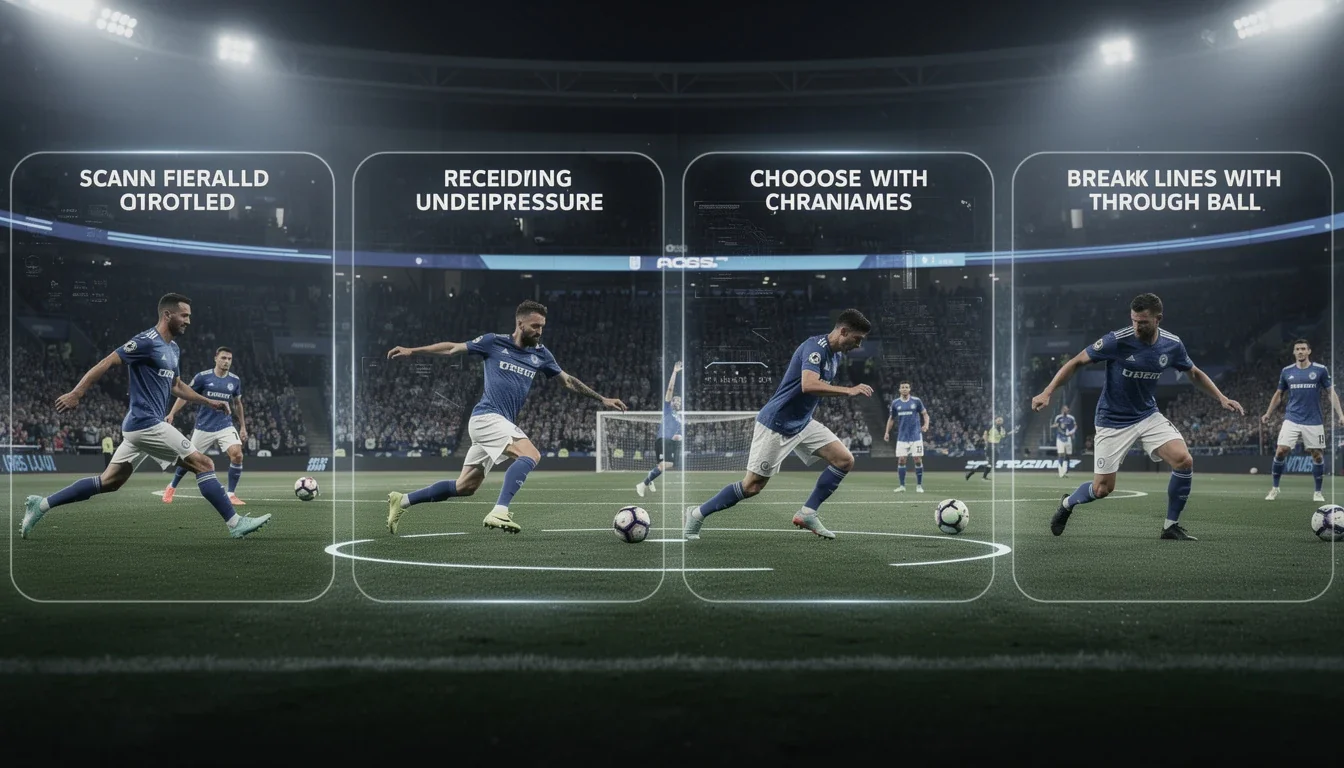
Recognizing the value of decision-making, top NCAA programs are overhauling their training methods. Instead of endless technical drills, you’ll find more “chaos games”—small-sided scenarios that force players to process information quickly and adapt to unpredictable situations. Coaches are encouraging midfielders to take risks in training, knowing that mistakes are opportunities for learning.
Video sessions now focus less on isolated errors and more on the decision chain—what led to the turnover? Was it a lack of awareness, a misread of pressure, or just a poor technical touch? By dissecting these moments, coaches help players build a mental framework for faster, better decisions in real games.
Recruiting is changing, too. More programs are using psychological profiling and cognitive testing to gauge a midfielder’s ability to process information and handle stress. These assessments can be as important as a player’s vertical jump or sprint speed.
Pro tip: When preparing highlight reels for recruiters, include sequences that show your thought process—quick one-twos, defensive recoveries, or moments where you chose not to force a risky pass.
Decision-Making and the Transfer Portal
The rise of the NCAA transfer portal has added a new wrinkle to the midfielder decision-making conversation. With more players exploring new programs each season, coaches are looking for “plug-and-play” midfielders who can adapt to different systems and teammates quickly. Decision-making is the ultimate transferable skill; a player who reads the game well at one school can often do the same at another, regardless of formation or style.
For players, this means that demonstrating adaptability and tactical IQ can make you stand out in a crowded portal. Coaches are calling former teammates and watching full-game film to assess how a midfielder manages transitions, not just highlight-reel moments.
If you’re considering a move, focus on showcasing your understanding of multiple systems—can you play as a holding midfielder in a 4-3-3 and then shift to an attacking role in a 4-2-3-1? The more you can prove your decision-making translates across contexts, the more appealing you’ll be to top programs.
Pro tip: When talking with potential transfer destinations, ask specific questions about their tactical philosophy and how midfielders are expected to make decisions. It’ll show you’re serious about your fit—and help you find the right home.
Building Decision-Makers Early: The Recruiting Shift
College coaches aren’t waiting until players arrive on campus to start developing decision-makers. The recruitment process itself is evolving, with more attention paid to a prospect’s soccer IQ and adaptability. ID camps and showcase events now feature more game-like scenarios, and coaches are increasingly scouting not just athleticism but also how players respond to pressure and changing situations.
For high schoolers dreaming of Division 1, it’s not enough to rack up stats or dominate technically. Recruiters want to see how you manage the game: Do you recognize when to slow play, when to speed it up, and when to play safe versus take a risk? Are you coachable and willing to adjust your game to fit a new system?
Families and club coaches can help by putting young midfielders in challenging situations—playing up an age group, taking on leadership roles, or switching positions to see the game from a new angle. The more you stretch these mental muscles early, the easier it’ll be to thrive in the high-pressure world of college soccer.
Pro tip: During showcase events, communicate clearly and often. Coaches are listening as much as watching—midfielders who organize teammates and give instructions are signaling high game intelligence.
What to Expect in 2026 and Beyond
Looking ahead, the demand for sharp-thinking midfielders is only going to intensify. As analytics become more sophisticated, expect programs to track everything from pass selection under pressure to recovery runs and communication frequency. The game will reward those who can process information quickly and act decisively.
Midfielders who master decision-making will not only get recruited—they’ll play bigger minutes, earn captain’s armbands, and lead their teams deep into the NCAA tournament. For aspiring players, that means investing as much time in video analysis and game IQ as you do in fitness and technical drills.
Coaches, for their part, will need to continue evolving training environments, making sure they’re preparing players for the chaos and complexity of the modern college game. And for fans and families, it’s time to appreciate the “invisible” work done by midfielders whose smart choices make everything else possible.
Pro tip: Set aside time each week to watch top-level college or pro games with a focus on one midfielder. Pause and predict—not just what will happen, but why. The habit of thinking like a coach will sharpen your own decision-making instincts.
Related Articles
Conclusion
The 2026 college soccer landscape will be defined by midfielders who can think fast, adapt instantly, and make the right call under pressure. Decision-making isn’t just the buzzword of the moment—it’s the new currency for success at the highest levels of NCAA Division 1. Whether you’re a player, coach, or fan, understanding and nurturing this skill is key to thriving in the next era of college soccer. Stay curious, stay coachable, and remember: the smartest feet win the midfield.