 By
ByEvery fall, NCAA Division 1 soccer fields across the country become arenas where David faces Goliath. The landscape is dominated by storied programs with deep recruiting pools, elite facilities, and storied traditions. Yet, year after year, we see smaller programs disrupt the narrative, toppling favorites and making deep postseason runs. How do these underdogs do it? At College Touchline, we’ve broken down the tactical blueprints that give less-favored teams a fighting chance—and sometimes, the edge they need to win it all.
Compact Defending: The Foundation of Upsets

When a team enters a match as the underdog, the first order of business is almost always defensive organization. Most top programs in Division 1 possess technical superiority and can keep the ball for long stretches. For underdogs, conceding space and chasing all game is a recipe for exhaustion and error. The solution? Compact defending.
Underdog teams typically prioritize a low-to-mid block, compressing the space between their lines and narrowing the field. This tactic makes it difficult for more talented opponents to find gaps and play through balls, forcing them to the wings where crosses are easier to defend. The compactness also means defenders have immediate support, so even if an attacker beats one player, there’s another body in the way.
Pro tip: Coaches should drill horizontal shifting and communication relentlessly. The more synchronized your back four and midfield are, the harder it is for opponents to break you down.
But compact defending isn’t just about parking the bus. Smart underdogs know when to step out and press, often triggering pressure when the ball is played backward or when a technical weak link is identified. This calculated aggression can create turnovers high up the pitch—sometimes leading directly to a goal against the run of play.
Quick Transitions: Turning Defense into Offense
Every underdog dreams of the perfect counterattack—the moment when disciplined defense flips into a lightning-fast attack. This is where upsets are born. The key is not just winning the ball, but making the first two or three passes count. The best underdog teams don’t just hoof it forward; they have specific patterns and runners ready to exploit space left by an opponent overcommitted in attack.
Look at the 2022 NCAA Tournament, where several lower-seeded teams advanced by mastering the art of the transition. They didn’t dominate possession, but they were clinical when it mattered. Transition moments create chaos, and chaos is the underdog’s friend.
Pro tip: Spend training time on 5v3 and 6v4 transition drills. It builds the quick decision-making and movement needed for lethal counterattacks.
What separates effective counterattacks from wasted opportunities is clarity: the first pass sets the tone, the second creates the advantage, and the third delivers the chance. Having one or two speedy, direct attackers is vital, but so is the vision to pick them out under pressure.
Set Pieces: The Great Equalizer
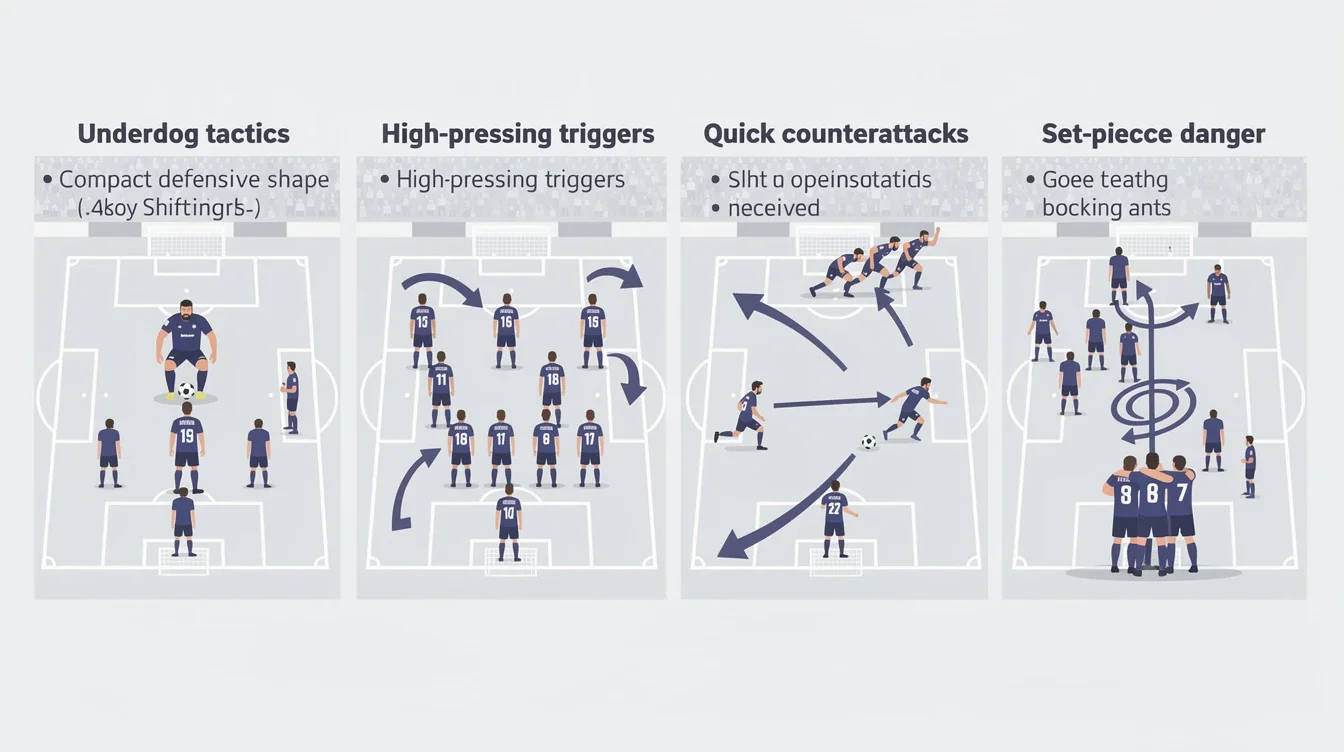
Set pieces—corners, free kicks, throw-ins—are the most democratic moments in soccer. In these brief windows, talent gaps shrink, and a well-rehearsed routine can topple giants. Underdog programs often pour hours into set piece preparation, knowing that one well-delivered ball can undo ninety minutes of dominance.
A key underdog tactic is variety. Mix up short corners, near-post flicks, and far-post overloads. Opponents may expect a direct delivery, so disguising intentions can catch them flat-footed. Defensive set piece organization is equally important. Clearing the first ball is non-negotiable, but underdogs can also exploit the counter by leaving a pacey player on the halfway line, forcing the opposition to leave numbers back.
Pro tip: Assign a “set piece captain” to manage positioning and communication on every dead ball. Consistency and accountability minimize costly mistakes.
Don’t underestimate throw-ins, either. Long throws can function like corners, especially in the chaos of college soccer, where marking can break down. Developing a specialist thrower adds another weapon to the underdog’s arsenal.
Psychological Warfare: Belief and Disruption
Tactics aren’t just about formations and runs; they’re also about mentality. Underdogs who believe they can win are exponentially more dangerous. Coaches and senior players must foster a collective mindset that respects but doesn’t fear the opposition. This belief translates into confident play—stepping into tackles, demanding the ball, and not shying away from big moments.
Beyond belief, underdogs often employ subtle psychological tactics to disrupt favorites. Slowing the game with tactical fouls, drawing opponents into unnecessary confrontations, or simply making the match uncomfortable can sap the confidence of more talented teams. The goal isn’t to play dirty, but to play smart—understanding when to disrupt the flow and when to ride momentum.
Pro tip: Use the opening minutes to set the tone physically. Clean, hard challenges remind opponents they’re in for a battle, not a walkover.
Bench energy matters, too. A loud, unified sideline can swing momentum and rattle favorites unused to adversity. The best underdogs make every player—starter or substitute—part of the psychological game plan.
Recruitment and Player Development for Underdogs
Success as an underdog isn’t just about matchday. It starts with building a roster that fits your tactical identity. Elite programs can sign the nation’s top prospects, but underdog coaches must look for overlooked gems: late bloomers, versatile athletes, or players from untapped regions. These recruits are often hungry, coachable, and willing to buy into a collective cause.
Player development is another pillar. The underdog advantage lies in maximizing every ounce of potential. This means individualized improvement plans, tactical education, and building resilience. Teams that punch above their weight often have a core of juniors and seniors who’ve grown to gether, developing team chemistry and tactical understanding that can’t be faked.
Pro tip: When recruiting, prioritize soccer IQ and personality as much as technical skill. Find players who thrive under pressure and love the challenge of facing top teams.
Finally, the transfer portal has become a powerful tool. Underdogs can add experience and quality by targeting players who want more minutes or a leadership role. The right transfer can change a program’s trajectory overnight.
Game Management: Finishing the Upset
Even after executing the perfect game plan, the final minutes of an upset are the most dangerous. Favorites throw numbers forward, and pressure mounts. Underdogs who manage these moments with composure often finish the job.
Effective game management means clear communication from the sideline—adjusting formation, using substitutions to break rhythm, and maintaining focus on defensive shape. Time-wasting, when used smartly, is a legitimate tactic. But the goal isn’t just to survive; it’s to finish strong. The most memorable upsets feature an underdog that keeps looking for chances, not one that retreats into a shell.
Pro tip: Practice closing out games in training. Simulate leading 1-0 with ten minutes left, and teach players to keep their heads, manage the clock, and play smart.
Leadership on the field is crucial. Veterans must calm nerves, organize set pieces, and keep teammates engaged. Every clearance, tackle, and pass feels heavier in these moments, but preparation turns anxiety into execution.
Conclusion
In NCAA Division 1 soccer, underdogs have never had more tools to level the playing field. Tactical discipline, smart recruitment, set piece mastery, and a belief in the impossible can—and often do—topple giants. For players and coaches, the lesson is clear: embrace your identity, prepare with purpose, and never underestimate the power of a team that refuses to accept its supposed limitations. At College Touchline, we’ll keep shining a light on the programs, coaches, and players who prove that in the beautiful game, nothing is predetermined—and the underdogs always have their day.