 By
Every season, the margins in Division 1 men's and women's soccer seem to get narrower. For mid-major programs, competing with Power Five schools often means leveraging every possible edge, especially in tactical preparation and player development. At College Touchline, we believe that video analysis isn't just for the pros or blueblood programs—it's a game-changer for the entire D1 landscape. In this case study, we'll break down how a mid-major D1 program used video analysis to flip the script against more highly ranked opponents, boost recruiting, and accelerate player growth. Whether you're a coach, player, or a serious fan, these insights can help you understand the real impact of video on college soccer success.
Setting the Stage: The Mid-Major Challenge

Mid-major D1 programs constantly face the uphill battle of limited budgets, smaller recruiting footprints, and, often, less national attention. Yet, these programs are also hotbeds of innovation, often outworking and outthinking their competition. Our case study focuses on a men's soccer team from a mid-major conference that, despite being picked to finish in the bottom half of the league, found ways to punch above its weight by embracing modern video analysis.
In preseason, the coaching staff identified two primary goals: improve defensive organization and create more efficient attacking transitions. They realized that traditional scouting and on-field work alone wouldn't close the gap. With limited staff and time, they needed a tool to help players see the game differently and correct issues faster.
Pro tip: When resources are tight, focus your video analysis on the most impactful game phases—defending, transition, and set pieces.
Building a Video Culture
The first step was shifting the team's mindset around video. Rather than using film as a punitive tool—highlighting only mistakes—the coaches reframed it as a way to empower players. They held short, focused sessions (never more than 20 minutes), each with a clear theme: pressing triggers, defensive shape, or counterattack patterns.
Players were encouraged to ask questions and even bring their own clips, creating ownership and buy-in. The staff used simple editing software, drawing lines and pauses to illustrate movement and decision-making. Over time, the locker room started to buzz about "that clip from yesterday," and video became part of the team's daily language.
Pro tip: Make video sessions interactive—ask players to predict what happens next or identify key moments for themselves.
Defensive Organization: From Theory to Execution
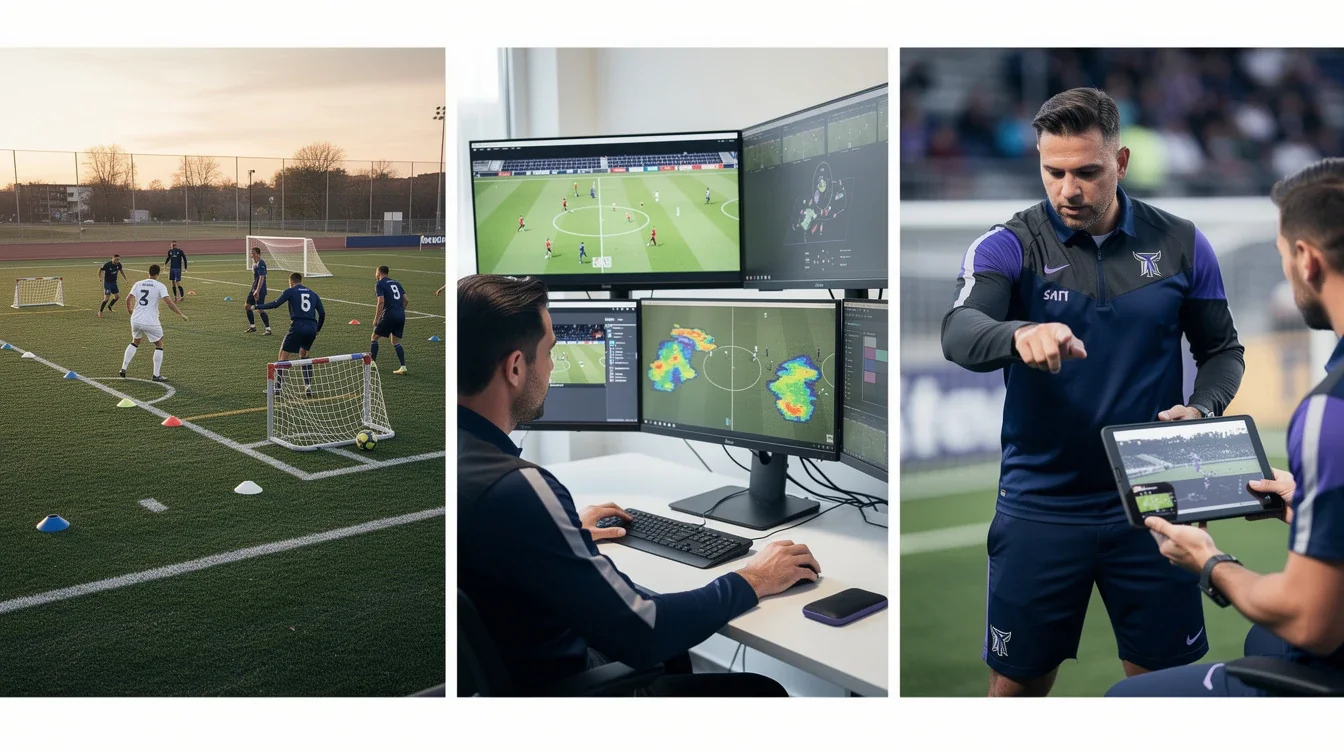
One of the team's biggest weaknesses in the past had been defending in a mid-block. Too often, midfielders failed to recognize when to step or drop, leading to gaps between the lines. Using video analysis, the coaches built a library of sequences from both their matches and top-level professional games.
In weekly sessions, players dissected these clips, pausing to discuss positioning, body orientation, and communication. The staff compared their own game footage against pro examples, making abstract concepts concrete. Over a month, the team began to move more cohesively, with midfielders and defenders adjusting in sync.
The real breakthrough came when players started to recognize cues in real time during games, calling out triggers and shifting as a unit. Defensive metrics improved: the team conceded fewer shots from central areas, and their expected goals against dropped by 30% from the previous season.
Pro tip: Pair video with simple on-field walk-throughs. Watch a clip, then immediately rehearse the movement outside—this bridges the gap between theory and action.
Attacking Transitions: Creating Chaos with Purpose
Transition moments—when a team wins or loses possession—are often where games are won or lost, especially for underdogs. The coaching staff noticed from early season video review that their attacks were too slow to develop, allowing opponents to recover defensively.
They began tracking every transition in games and training, tagging clips where the team won the ball and looked for immediate forward options. Short video montages highlighted best practices: quick first passes, supporting runs, and exploiting space before the opponent could regroup.
Players saw themselves in these clips—sometimes missing a run, sometimes making the perfect choice. Gradually, the team shifted from a conservative mindset to a more aggressive, calculated approach. Their goals from open play increased, and they became known for punishing turnovers.
Pro tip: Use video to spotlight positive examples, not just errors. Show players their own "highlight reel" moments to reinforce good habits.
Scouting Opponents: Leveling the Playing Field
One of the toughest challenges for mid-majors is preparing for higher-profile opponents with deeper rosters and more tactical flexibility. The coaching staff used video analysis to break down opponents' patterns—set piece routines, pressing schemes, and preferred attacking channels.
Before each game, players watched curated clips focused on two or three key tendencies. For example, a top team in the league always overloaded the left side before switching play to a speedy right winger. By seeing this in advance, defenders were ready to anticipate the threat, and the game plan adjusted accordingly.
This targeted approach led to several upset results, with the team earning points against opponents who had previously dominated the matchup. Players gained confidence, knowing what to expect and how to disrupt the opposition's rhythm.
Pro tip: Don't overload players with information. Focus on 2-3 actionable insights per opponent—it's about clarity, not quantity.
Recruitment and Player Development
Video analysis didn't just help on the field—it became a powerful recruiting and development tool. The coaching staff began creating personalized video breakdowns for recruits, showcasing the team's style and how a prospective player could fit in. This transparent approach resonated with recruits looking for programs where they'd be valued and developed.
For existing players, regular video check-ins replaced vague feedback with real examples. Instead of saying "work on your positioning," coaches could point to specific situations and track progress over time. Players took greater responsibility for their own learning, often reviewing clips independently and seeking extra feedback.
This culture of growth led to notable individual improvements and, ultimately, better team results. The program's reputation grew, and retention improved as players felt invested in both their own and the team's progress.
Pro tip: Share video clips with recruits and their families—it's a tangible way to demonstrate your program's commitment to development.
Lessons for College Coaches and Players
This case study illustrates that you don't need a pro-level analytics department or fancy software to make a difference. It's about building a video-first culture, focusing on the moments that matter most, and making analysis a two-way street between staff and players.
Coaches at all levels can start small—short, focused sessions, a few actionable takeaways, and an open environment for questions and feedback. Players, for their part, should embrace video as a tool for self-improvement, not criticism.
Pro tip: Consistency is key. Make video a regular part of your week, not just a reaction to losses or mistakes.
Conclusion
Video analysis has become a competitive necessity in D1 soccer, and mid-majors can wield it as effectively as any Power Five program with the right approach. By making video interactive, focused, and player-driven, this mid-major squad not only closed the gap with its rivals but carved out a new identity—one rooted in preparation, adaptability, and growth. Whether you're coaching, playing, or supporting from the touchline, take these lessons to heart. The next edge in college soccer might just be a few clips away.