 By
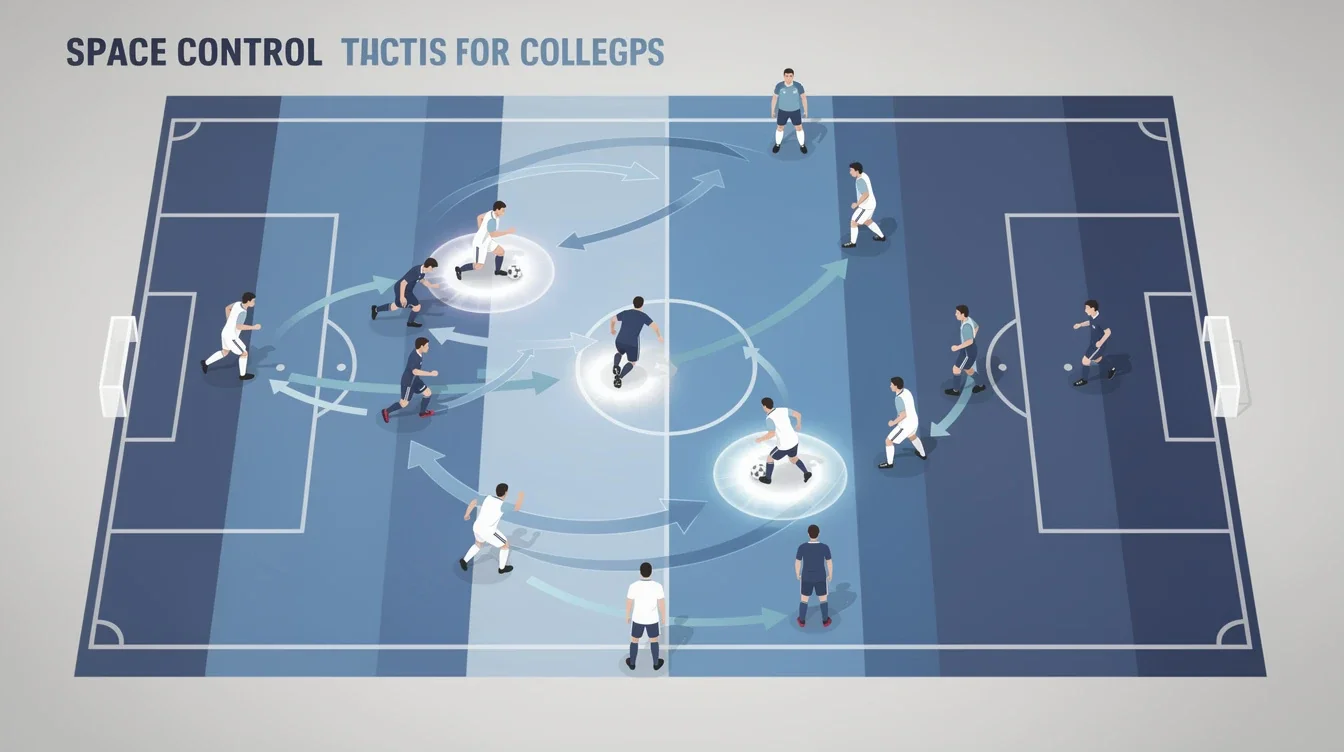
ByMidfielders are the heartbeat of any NCAA Division 1 soccer squad. Every pass, tackle, and run is amplified at this level—where inches matter and the tempo never drops. But the true separator between good and great midfielders? Space control. Mastering the art of dictating and denying space isn't just about flair or fitness; it's a blend of intelligence, anticipation, and technical skill. Today on College Touchline, we'll break down how you can elevate your midfield game by becoming a master of space, ensuring you're not just seen, but remembered by coaches and scouts alike.
Reading the Field: The Foundation of Space Control

Space control always begins before the ball arrives. Elite college midfielders are constantly scanning, assessing both their teammates' positions and the opposition's shape. If you're reacting only after receiving the ball, you're already a step behind. The best midfielders process information in real time, predicting where pressure will come from and where space will open up.
A disciplined scanning routine is essential. As play develops, shift your gaze between the ball, your immediate zone, and potential passing lanes. Don't just scan randomly—focus on anticipating triggers: a fullback about to overlap, a striker dropping deep, or a winger preparing to invert. This allows you to position yourself to receive under minimal pressure or to cut out dangerous passes when defending.
Pro tip: Each time your team switches play or regains possession, make it a habit to check over both shoulders. With a 360-degree awareness, you'll spot pockets of space or lurking opponents before anyone else.
Movement Off the Ball: Creating and Exploiting Pockets
Space isn't just something to be found—it's something to be made. High-level midfielders are constantly in motion, not out of restlessness, but with purpose. Your off-ball movement can drag defenders away, create overloads, or open passing lanes for teammates.
Think about timing your runs to break lines just as a defender looks away or steps forward. If you're a deeper midfielder, drifting laterally can create space for a center back to step up. Advanced midfielders can ghost into half-spaces, finding room between the lines for a quick combination or shot.
It's also important to understand when to stand still. Sometimes, holding your ground in a seam forces defenders to make a choice—commit to you and open up space elsewhere, or stay disciplined and let you operate unpressured.
Pro tip: Experiment in training with “double movements”—feinting one direction before darting into another. This keeps defenders guessing and helps you arrive in space at the perfect moment.
Defensive Space Management: Denying and Compressing
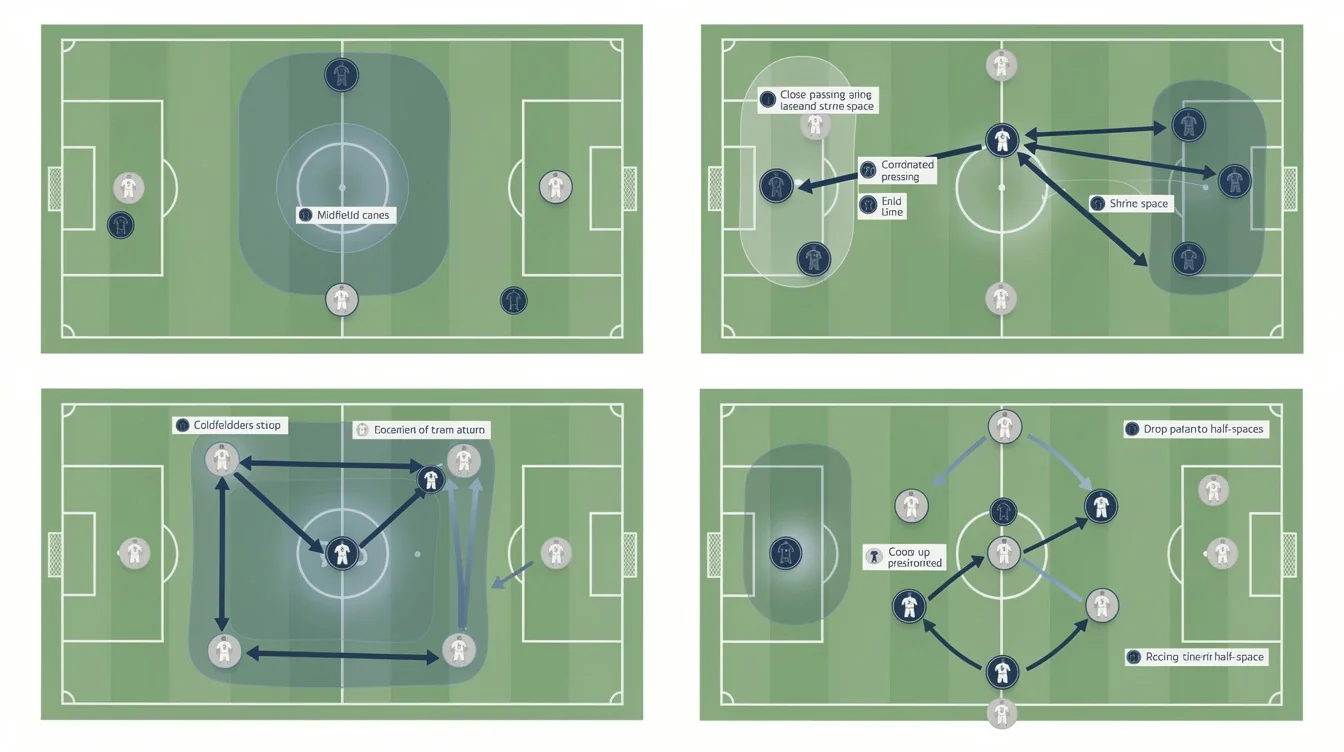
Controlling space isn't just an attacking discipline. Elite college midfielders are just as effective without the ball, compressing space to suffocate the opposition and win possession back higher up the pitch.
The first step is understanding your team’s defensive shape. Are you pressing high, holding a mid-block, or sitting deep? Your position relative to the ball, the nearest opponent, and your midfield partner(s) will change accordingly. When pressing, angle your approach to force the opponent into predictable areas—the sidelines or towards your teammates. In a block, shuffle to cut off passing lanes and maintain compactness.
Communication is often the missing ingredient. Use your voice to direct teammates, pointing out runners or signaling when to step or drop. A well-organized midfield can make even the most technical opponents look average by reducing their time and space on the ball.
Pro tip: After every defensive action—whether you press, drop, or intercept—quickly reassess and reset your spacing. The speed of college soccer means gaps can appear in a flash if you switch off.
The First Touch: Turning Space Into Opportunity
No matter how well you position yourself, a poor first touch can squander all your hard work. At the NCAA Division 1 level, your first touch isn’t just about control—it’s your weapon for maximizing space.
Before receiving, decide what you want to do next. Is there room to turn? Do you need to play one-touch? Is an opponent closing in? Shaping your body to receive on the half-turn opens up the field and lets you play forward quickly. When under pressure, use your first touch to shield the ball or direct it away from incoming defenders.
Great midfielders use their first touch to attack open space, not just maintain possession. Whether it’s a burst forward, a diagonal dribble, or a deft flick into the path of a teammate, your technical execution transforms available space into real advantage.
Pro tip: Practice receiving passes from different angles and speeds. The more comfortable you are under varied conditions, the more consistently you’ll control tight spaces on game day.
Tempo and Decision-Making: Dictating the Game
Controlling space is deeply tied to controlling tempo. The best college midfielders know when to accelerate play and when to slow it down. If the opposition is stretched, a quick switch or incisive pass can break lines. If your team needs to settle, simple passes and smart positioning can help you keep control and draw opponents out.
Decision-making is the glue that holds all these elements to gether. Recognize moments to risk a vertical pass or when to recycle possession. Trust your read of the game. Coaches and scouts don’t just look for flashy plays—they want midfielders who consistently make the right decisions under pressure.
Pro tip: Watch professional or high-level college games focusing only on the midfielders. Note how they use one or two touches to keep the ball moving, manipulate defenders, and open new spaces for their team.
Adapting to Opponents: Flexible Space Control
Every opponent presents a unique challenge. Some teams pack the midfield with bodies, while others sit deep and look to counter. The most effective midfielders adjust their space control tactics game by game—even play by play.
Against a compact midfield, you might need to drift wider or drop deeper to find space. When facing an aggressive press, it’s about quick combinations and fast release of the ball. Sometimes, the smartest move is to create space for someone else, sacrificing your own touches for the team’s benefit.
Flexibility is also mental. Stay open to feedback from coaches and teammates. Midfield is a position of constant adaptation—your ability to read the cues and tweak your approach is what will set you apart in the eyes of recruiters and decision-makers.
Pro tip: Keep a post-game journal. After each match, jot down how you adjusted your positioning, what worked, and what you’d do differently next time. This habit accelerates your tactical growth.
Related Articles
Conclusion
Space control is what separates the good from the great in NCAA Division 1 soccer. For midfielders, it's not just about running harder or passing sharper—it's about thinking quicker and positioning smarter. By developing your scanning habits, mastering purposeful movement, denying and compressing space defensively, perfecting your first touch, dictating tempo, and adapting to each opponent, you'll become a linchpin in any midfield.
Remember, the midfield battle is rarely won by the flashiest player—it's won by the one who sees the game a step ahead. Keep honing these tactics and you'll not only stand out to coaches and scouts, but also elevate everyone around you. Stay sharp, keep learning, and control the space—because in college soccer, space is everything.