
 By
ByFor any aspiring NCAA Division 1 soccer player, the route to a college roster is a journey full of choices, trade-offs, and sometimes, confusion. Among the most common questions we get at College Touchline is whether playing in MLS Next or another top-tier “elite club” environment best sets a player up for recruiting success. Behind the buzzwords and recruiting pitches, there’s real data, hard choices, and distinct developmental philosophies. Today, we’ll break down the recruiting outcomes of MLS Next compared to elite clubs, so you and your family can make informed decisions about your path to D1 soccer.
Understanding the Landscape
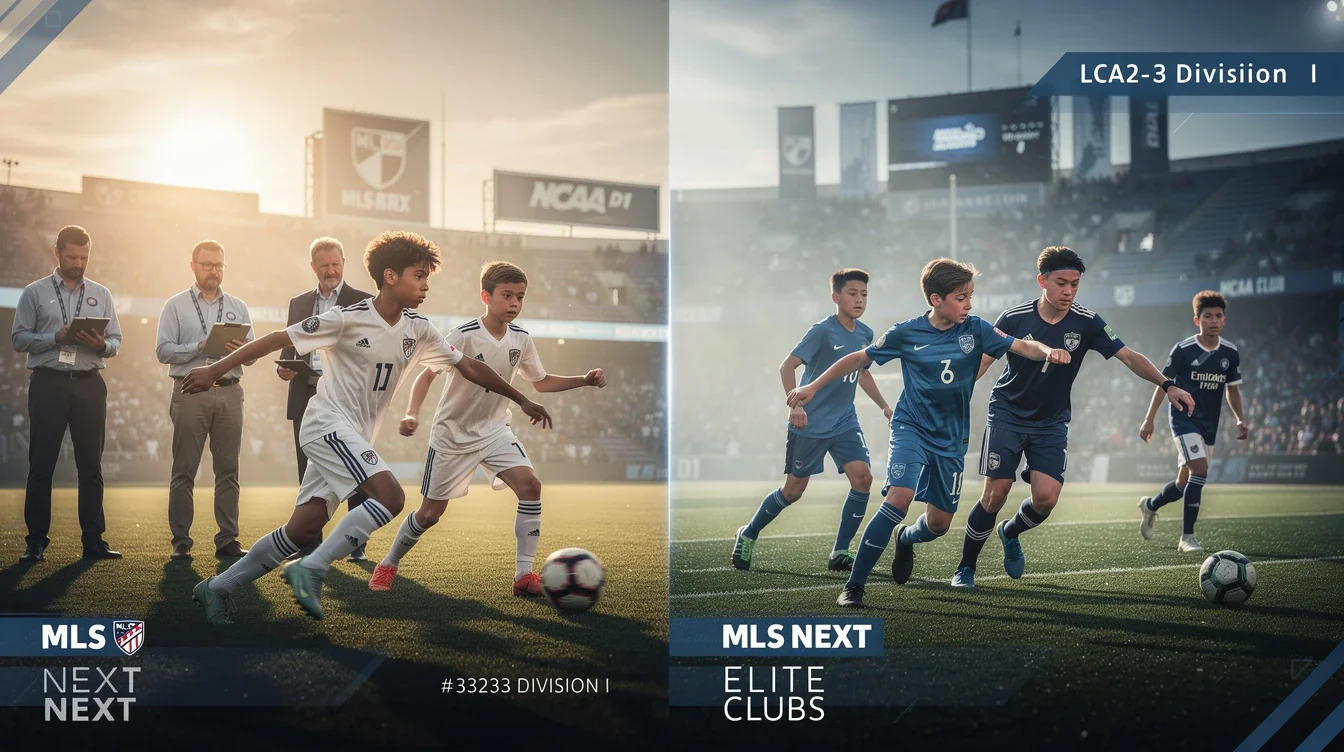
The soccer landscape for high school-age players in the U. S. has changed dramatically in the past five years. MLS Next, launched in 2020, has quickly become the flagship boys’ developmental league, with direct ties to professional clubs and a reputation for elite competition. But MLS Next isn’t the only path. Across the country, there are independent elite clubs—longstanding ECNL teams, powerhouse USYS clubs, and unaffiliated academies—that continue to produce top D1 talent.
Recruiters know the nuances. While MLS Next offers a direct pipeline to pro academies and a consistent level of competition, elite clubs typically provide more flexibility, a broader showcase schedule, and, in some cases, a stronger culture of college placement. The choice impacts not just your exposure, but also your day-to-day development, style of play, and even scholarship opportunities.
Pro tip: Before you commit to a league or club, ask current college players where they played and how they got recruited. Their stories can be more revealing than any marketing brochure.
Recruiting Trends and Data
Let’s get granular. Which environments actually produce more D1 recruits? Recent data shows that MLS Next teams do place a higher percentage of their players into D1 programs. In the 2023 recruiting cycle, over 60% of MLS Next U19 starters signed with NCAA D1 schools. The numbers from the “elite club” pool are slightly lower on average—around 45%—but with some clubs consistently punching above that figure.
There’s a nuance here: MLS Next rosters are more selective to begin with, often drawing from a wider geographic area. Their training environments are more professionalized, with more hours on the ball and higher standards of physical and tactical preparation. Colleges know this, and when evaluating a player from MLS Next, they can reasonably compare apples to apples across the country.
Elite clubs, on the other hand, vary widely. Some top ECNL or USYS programs have relationships with dozens of D1 staffs; others are focused more on local or D2/D3 placement. The best elite clubs rival MLS Next in exposure and player development, but the average is more variable.
Pro tip: Don’t just look at the number of D1 commits from a club—ask how many of them actually play significant minutes as freshmen. That’s a truer measure of preparation.
College Coach Perspectives
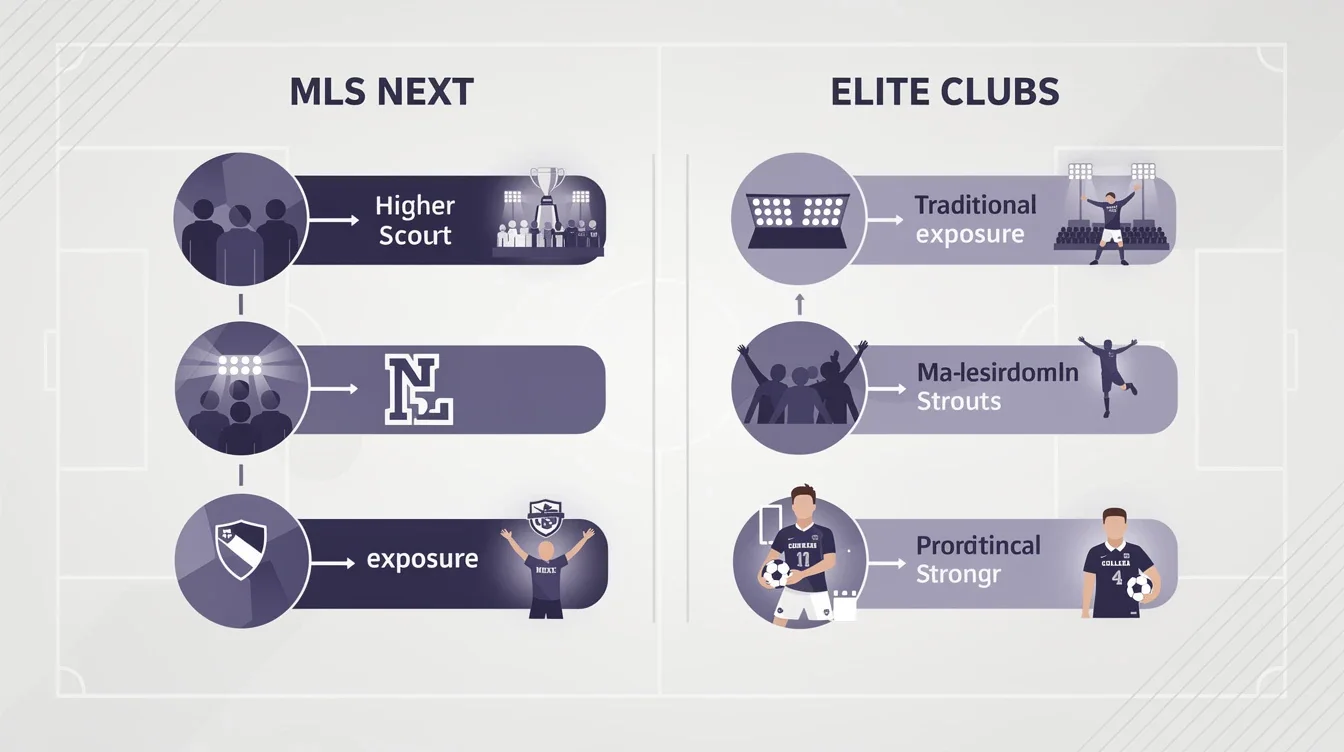
College coaches are the gatekeepers, and their perspectives shape recruiting outcomes as much as any league format. When we speak to D1 recruiters, a few themes emerge. MLS Next players are seen as “battle-tested,” used to high-speed games, and familiar with modern tactical systems. Coaches know they’ve played against future pros and have been coached in environments that simulate the college game in terms of tempo and intensity.
That said, there’s a recognition that not all MLS Next clubs are equal. The league’s pro-affiliated academies (think FC Dallas, Philadelphia Union) are a step above the independent MLS Next teams. Coaches still value elite club alumni, especially from ECNL clubs with a proven track record. In fact, many D1 rosters are a blend—MLS Next defenders, ECNL midfielders, and forwards from a top USYS program.
The recruiting process itself can differ. MLS Next showcases and league games attract heavy college scouting, but elite clubs often have more flexibility in attending regional and national showcases, sometimes getting their players in front of more diverse coaching staffs.
Pro tip: When reaching out to college coaches, reference your competition level—mention the MLS Next or ECNL teams you’ve faced, not just your own club.
Player Development and Playing Style
Beyond recruiting numbers, development matters. MLS Next environments tend to emphasize tactical intelligence, physical robustness, and positional flexibility. Players learn to adapt quickly, as the league’s structure mimics elements of the pro game—pressing schemes, build-out patterns, and video analysis are standard. For many players, this foundation translates seamlessly to the demands of D1 soccer.
Elite clubs, especially those in ECNL, often focus on technical excellence and creativity. Training sessions might be less rigid, allowing for a bit more individualism. Some coaches believe this freedom can help players stand out in college, where moments of individual brilliance can turn games. The best elite clubs also prioritize player wellness, balancing development with academic and social growth.
It’s important to note that MLS Next schedules can be grueling, with heavy travel and fewer breaks for high school soccer or other sports. Elite clubs may offer more flexibility, which can matter for multi-sport athletes or those wanting a balanced high school experience.
Pro tip: Consider your playing style and personality. If you thrive in a highly structured, competitive environment, MLS Next may suit you. If you value flexibility and creativity, the right elite club could be your best fit.
Exposure and Visibility
Exposure is the currency of college recruiting. MLS Next offers a streamlined path: national showcases, league games attended by dozens of D1 staffs, and a reputation that ensures most games are scouted, especially at the U17-U19 levels. The league’s close relationship with U. S. Soccer and professional academies means standout players are rarely overlooked.
Elite clubs, however, can offer broader exposure in some cases. ECNL and top USYS showcases draw hundreds of college coaches from all NCAA divisions, and the open nature of these events gives more players a chance to be seen. Some elite clubs also attend international tournaments or host their own showcases, further increasing opportunities. If you’re not in a pro-market city, a top elite club may actually offer more touchpoints with college programs.
It’s also worth noting that some college coaches prefer players who’ve experienced a variety of competitive formats, believing it fosters adaptability and resilience.
Pro tip: Don’t rely solely on your club or league for exposure—proactively reach out to college coaches, send game film, and attend ID camps.
Scholarships and Academic Balance
Finally, let’s talk scholarships and academics—two pillars that too often get overshadowed by league logos. D1 soccer programs have a limited number of scholarships to divide among their roster, so your recruiting “stock” is shaped by both your pedigree and your fit for a program’s needs.
MLS Next players sometimes receive more substantial scholarship offers, simply because coaches perceive less risk—these players are viewed as more likely to contribute immediately. That said, many elite club players negotiate strong scholarship packages, especially if they bring unique skills or fit a coach’s playing style.
Academic balance is another consideration. MLS Next schedules can make it tough to participate fully in high school life or maintain a high GPA, especially during heavy travel periods. Elite clubs, with more local games and flexible training, may offer more breathing room for honors classes, AP courses, or other extracurriculars. For the academically ambitious, this balance can be vital.
Pro tip: When evaluating clubs or leagues, ask about their academic support—do they help players manage schoolwork during travel? Are there tutors or study halls?
Conclusion
The path to NCAA D1 soccer is rarely linear, and there’s no single “right” league or club that guarantees success. MLS Next offers a professionalized, high-exposure environment that’s proven to produce D1-ready players—if you’re ready for the grind. Elite clubs, especially the best ECNL and USYS programs, provide flexibility, a tradition of college placement, and sometimes, a better balance for the student-athlete.
Ultimately, your recruiting outcome will depend on your performance, your fit for a college’s needs, and your ability to market yourself, regardless of your club’s badge. Talk to coaches, analyze your own goals, and don’t be afraid to blaze your own trail. At College Touchline, we’re here to help you navigate every step, so you can make the most informed—and rewarding—decision possible.