 By
ByMidfielders are often called the engine of a soccer team, orchestrating both the attack and defense while covering vast stretches of the field. But what separates a good college midfielder from a truly elite one isn’t just technical skill or passing range—it’s their intelligence and activity off the ball. In NCAA Division 1 soccer, where margins are razor-thin and tactical awareness is crucial, mastering off-ball movement can mean the difference between dictating play and disappearing in high-stakes matches. In this deep dive, we’ll break down the key off-ball movement tactics every college midfielder should know, why they matter, and how you can implement them to elevate your game and recruitment potential.
Understanding Off-Ball Movement

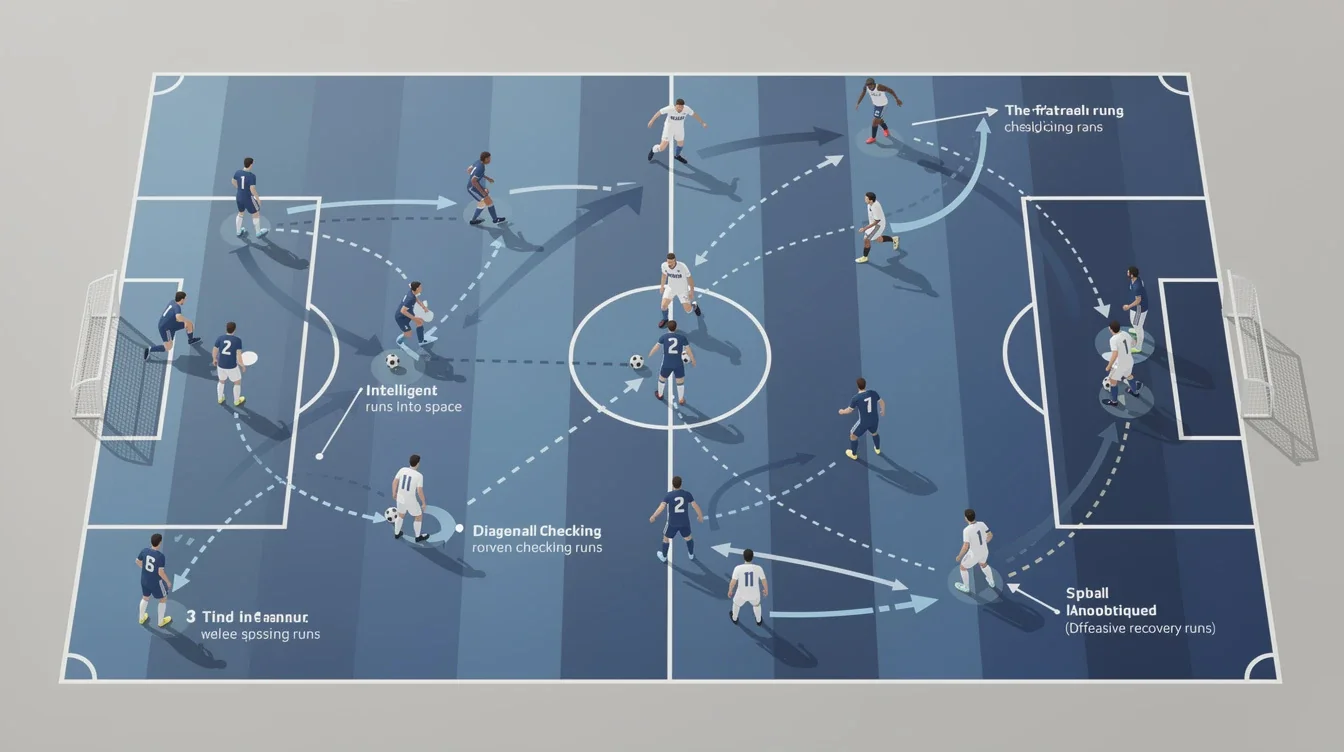
Before we dig into advanced tactics, let’s clarify what off-ball movement is and why it’s a cornerstone of elite midfield play. Simply put, off-ball movement refers to any action you take without the ball—your runs, positioning, checking, and even your feints. For midfielders, this isn’t just about finding space for yourself; it’s about manipulating defensive lines, creating passing options, and opening up lanes for teammates.
In college soccer’s intensely structured systems, defenders are quick to close down space. That’s why static midfielders—those who only come alive when the ball’s at their feet—often get neutralized. The best midfielders are thinking two or three steps ahead, constantly adjusting their positioning based on the ball, teammates, and opponents.
Pro tip: Always scan the field before and after each pass so you can anticipate where the next space will open up.
Creating and Exploiting Space
One of the primary objectives of off-ball movement is to create and exploit space—both for yourself and others. This means more than just “finding a pocket.” It’s about understanding defensive shapes and knowing how to stretch, overload, or disrupt them.
For example, when facing a compact 4-4-2 defensive block, a midfielder can drag an opposing central midfielder wide with a decoy run, freeing up space for a teammate to receive centrally. Alternatively, checking into a gap between the lines can force defenders to step out of shape. Timing is everything: move too early and defenders recover; too late and the window closes.
It’s also key to read your teammates’ intentions. If your fullback is about to overlap, a subtle drift inside can either draw your marker or open the flank for them. In transition moments, sprinting into advanced positions can pin defenders or create overloads in wide areas.
Pro tip: Practice making multiple types of runs in training—diagonal, vertical, and lateral—to see how defenders react and to better understand which movements open up which spaces.
Supporting the Possession Phase
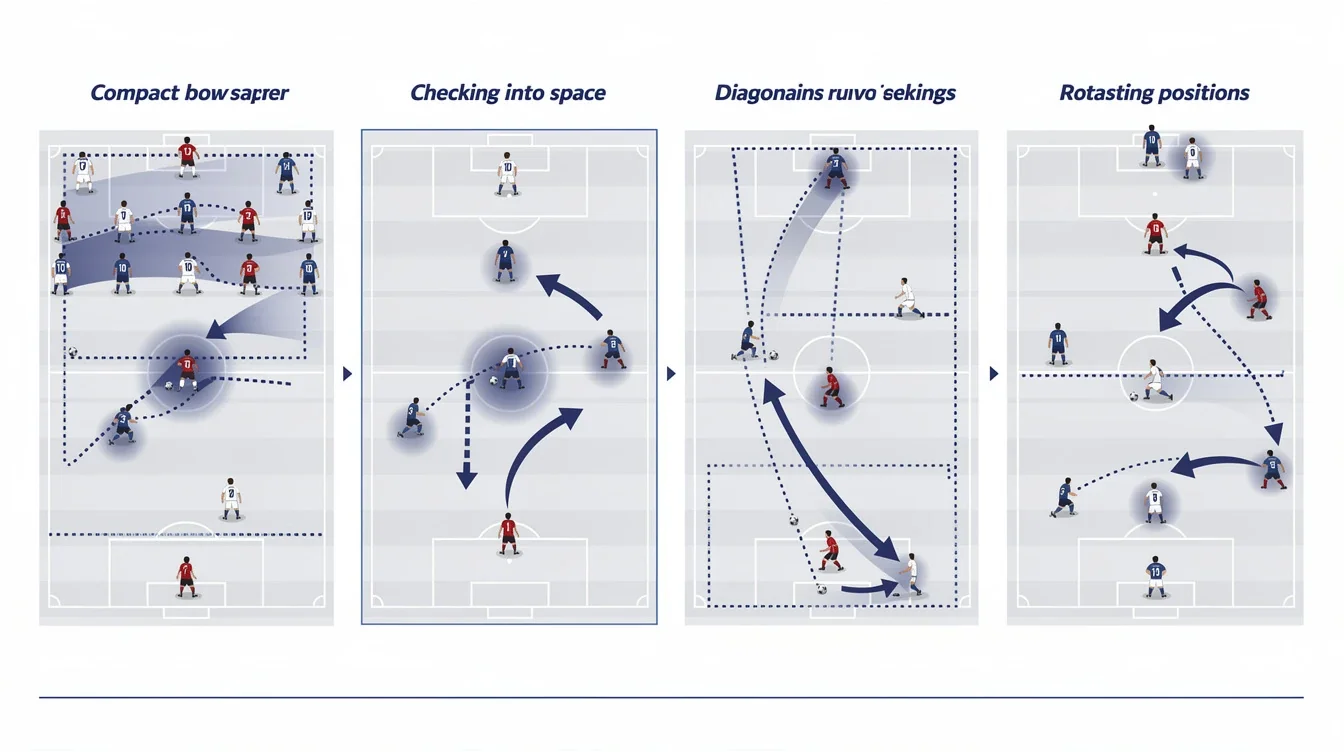
A possession-based system lives and dies by the quality of its midfielders’ off-ball support. It’s not enough to just “be available”—you need to offer angles, break lines, and ensure the ball carrier always has at least two safe outlets.
This starts with simple checking movements: dropping into the defensive line to create a back three under pressure or stepping up into the half-space to receive between midfield and defense. The best midfielders are constantly adjusting their position relative to the ball, always seeking to be in the “shadow” where defenders can’t easily see both you and the ball.
Another crucial tactic is the “third man run.” If you’re not the immediate receiver, make a run that anticipates the next pass—either bursting forward into space or pulling a marker away to free up a teammate. This type of proactive thinking not only helps maintain possession but creates dangerous opportunities in the final third.
Pro tip: Communicate constantly—use subtle gestures or calls to let teammates know you’re open or to direct the next pass in a sequence.
Defensive Off-Ball Intelligence
Off-ball movement isn’t just an attacking tool; it’s vital defensively, too. Elite college midfielders master the art of pressing triggers, cover shadows, and intelligent positioning to disrupt opponents’ build-up and shield the back line.
Pressing as a unit requires midfielders to coordinate their movement with forwards and wide players. If the striker presses the center back, the nearest midfielder might step to cut off the passing lane into the six. Meanwhile, the weak-side midfielder shifts across to balance the shape and prevent easy switches.
Anticipation is key. Instead of chasing the ball, focus on intercepting likely passing lanes and denying opponents time to turn. When you’re out of possession, scan for “danger men”—often the opposing playmaker—and position yourself to block their influence.
Pro tip: Watch professional or top NCAA teams and focus only on one midfielder’s movement when defending. Notice how much ground they cover without actually touching the ball.
Timing and Deception in Runs
Elite off-ball movement isn’t just about where you go—it’s about when and how you go. The best midfielders disguise their intentions, using feints, pauses, and sudden changes of pace to shake markers and exploit defensive lapses.
A well-timed delayed run into the box, for example, often results in a clear shooting chance. Sometimes, simply hesitating for a split-second outside the penalty area before darting in can catch defenders flat-footed. Similarly, “double movements”—a quick check away followed by a sharp burst into space—are highly effective for shaking tight markers.
Deception can also be about body language. Open your hips as if you’re showing for a short ball, then spin in behind for a longer pass. The more unpredictable your movement, the harder you are to defend.
Pro tip: In your next game, focus on disguising at least three of your runs—vary your pace, direction, and use of feints to see how defenders react.
Off-Ball Movement and Recruitment
For aspiring NCAA Division 1 players, demonstrating high-level off-ball movement can be a game-changer in the recruiting process. College coaches are always on the lookout for midfielders who read the game, make unselfish runs, and impact play even without direct involvement.
In highlight videos, don’t just showcase your goals and assists—include clips where your movement creates chances or breaks lines. During showcase events, prioritize intelligent runs and communication; coaches notice players who make their teammates better.
At the college level, “coachable” players—those who can interpret tactical instructions and execute off-ball responsibilities—are far more likely to earn playing time and develop into key contributors. If you’re serious about taking your game to the next level, investing in your off-ball habits is non-negotiable.
Pro tip: Ask your coach or a trusted teammate to provide feedback on your off-ball movement after matches. Objective input can help you identify areas for improvement and refine your tactical awareness.
Conclusion
Off-ball movement is the invisible skill that separates good college midfielders from game-changers. Mastering these tactics isn’t about flashy dribbling or highlight-reel passes—it’s about intelligence, timing, and a deep understanding of how the game flows. Whether you’re looking to earn a starting spot at a top NCAA program or cement your role as a team leader, investing in your off-ball movement will pay dividends in every phase of play. Stay proactive, stay curious, and remember: the best midfielders are always one step ahead—even when the whole stadium isn’t watching.