 By
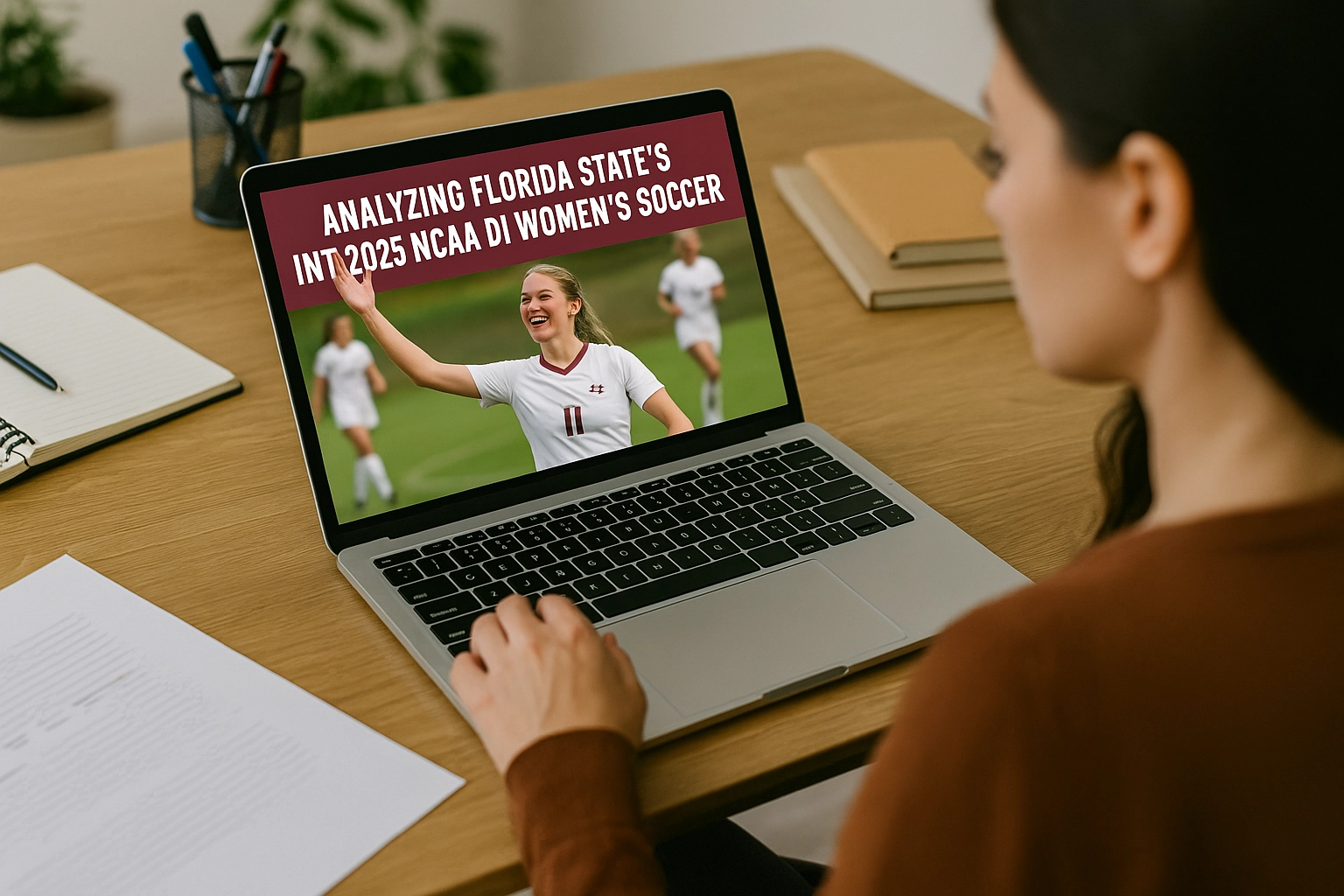
ByHow did Florida State turn a high pressure final into a clinic in control, decision making, and composure? In this analysis of Florida State’s victory in the 2025 NCAA DI Women’s Soccer Championship, we unpack the layers behind a women’s soccer win that looked inevitable by the closing whistle. This result was built on more than talent. It reflected clear tactical planning, disciplined execution, and smart in game adjustments.
If you are new to soccer analysis, you are in the right place. You will learn how Florida State’s shape affected space, what pressing triggers are, and why build up patterns matter. We will walk through the key moments that shifted momentum, highlight how set pieces were designed, and explain the numbers that tell the story, shot quality, field tilt, and defensive duels. Jargon will be defined in plain language, and every concept will be tied to what you saw on the field. By the end, you will understand not only how Florida State won, but also what their approach reveals about trends at the top of the college game and how to watch the next big match with a sharper eye.
Context and Background of the 2025 NCAA Women’s Soccer
Season snapshot
The 2025 NCAA Division I women’s soccer season delivered a signature women’s soccer win on the biggest stage, capped by Florida State’s 1-0 result over Stanford in the College Cup final. The 64-team tournament ran from November 14 to December 8, with the College Cup staged at CPKC Stadium in Kansas City. Across 63 matches, teams combined for 192 goals, and total attendance reached 93,767, a clear signal of accelerating fan interest and program investment. Rule adjustments, including the removal of red cards for non-deliberate actions, subtly changed match management and risk calculus in midfield duels. For schedule, venue, and match totals, see the 2025 NCAA Division I women’s soccer tournament overview, and for the title result, see Florida State wins the 2025 national championship.
Florida State’s 16-2-4 and the title pathway
Florida State’s 16-2-4 record reflected a disciplined defensive profile and late-game execution that traveled well in knockout play. The Seminoles stacked clean sheets in the College Cup, including a final decided by a late strike and anchored by a freshman goalkeeper who produced nine saves under pressure. In Pensky’s fourth season, continuity in roles and training periodization showed, with set piece efficiency and ball recovery in the middle third driving expected-goal advantage over top seeds. The win delivered the program’s fifth national title and reinforced the ACC’s depth at the national level. Program perspective is detailed in Seminoles secure a fifth national title.
Stanford’s 21-2-2 and elite consistency
Stanford’s 21-2-2 run included a 17-match unbeaten streak and the top overall seed, backed by Player of the Year form from Jasmine Aikey. The Cardinal controlled territory and chance creation throughout the bracket, but ran into an organized block and hot goalkeeping in the final. Their season still underscored a durable model, possession with purpose, balanced by quick counter pressure.
Coaching dynamics that shaped 2025
Coaching stability mattered. Florida State benefited from Brian Pensky’s steady structure, clear pressing cues, and cohesive locker room culture. Across Division I, staffs leaned further into analytics and specialist roles, a response to tighter margins and evolving rules. Roster management also shifted, with 6 to 7 percent annual portal turnover and roughly 700 to 800 entrants, elevating the value of scouting replacement profiles and succession planning. For recruits and families, prioritize programs with defined game models, documented staff continuity, and clear plans for portal integration under the new scholarship and direct-payment landscape.
Strategies that Led to Florida State’s Success
Defensive and offensive tactics
Florida State’s structure blended a proactive high press with a compact recovery block. Press triggers came on backward passes and sideline traps, funneling play into crowds. That pressure limited clear entries, then the back line reset quickly to deny space. In the final, a resilient block plus elite goalkeeping produced a 1-0 shutout, consistent with their 16-2-4 season profile. Freshman Kate Ockene made nine saves, anchoring the win FSU’s 1-0 College Cup win recap.
Role of key players
Match winners emerged at both ends. Wrianna Hudson delivered the decisive 87th minute finish, earning College Cup honors. Ockene, a freshman, claimed Defensive Most Outstanding after her nine-save performance. Earlier cycles shaped the attack’s identity, including the 2023 final where five goals flowed. Jordynn Dudley and Jody Brown struck 26 seconds apart, a template for ruthless surges FSU’s five-goal title performance.
Game-winning strategies in the final
Florida State managed tempo with selective pressure, then settled into a disciplined mid block, a compact shape in midfield. The front three pressed on predictable cues, while midfielders screened passing lanes, and 2025 rules removing red cards for non deliberate actions slightly reduced dueling risk. Late substitutions preserved running power for the closing phase and set up the winner. Efficiency mattered, one high quality chance was converted, and all defensive details held. For coaches, rehearse game states, practice sideline traps, and script late corner routines.
Teamwork and coaching guidance
Brian Pensky’s staff built a clear game model, then trusted it under pressure. Young players integrated seamlessly, supported by veterans who stabilized momentum swings. Roster planning reflected today’s realities, including a 6 to 7 percent annual transfer churn. Training emphasized compact distances, first pass out of pressure, and decisive transition runs. For recruits, prioritize systems that fit your strengths, for coaches, align profiles to roles.
Significance of the Transfer Portal on Team Dynamics
Increasing player movement and its impact on teams
Since the portal’s launch in 2018 and the 2021 one-time transfer exception, player mobility has accelerated across Division I. In women’s soccer, 700 to 800 players now enter the portal annually, which equates to roughly 6 to 7 percent roster turnover each year. That churn can be healthy, offering programs immediate upgrades in key areas, yet it also tests cohesion, leadership hierarchies, and training rhythm. Programs report that integrating multiple newcomers alters on-field communication and off-field culture. Across the NCAA, transfers are surging, as detailed in how transfer student-athletes have changed the game.
Strategic use of the transfer portal for team building
Successful staffs treat the portal as targeted procurement rather than wholesale replacement. Start with a gap analysis by class year and position, then prioritize plug and play roles that swing results, such as goalkeeper, center back, and the holding midfielder. Build a rolling board of 10 to 12 portal candidates, vet tactical fit with objective clips, and validate personality fit through references before any offer. Require early arrivals for spring integration, including leadership pairing with captains and individualized periodization plans. Programs that execute this playbook blend portal experience with internal development, which translates into a women’s soccer win when margins are thin in knockout phases.
Influence on recruitment and player retention
The portal forces a dual track approach, with staffs splitting time between high school ID evaluation and real time portal monitoring. Scholarship models and direct athlete payments are reshaping decision drivers, so transparency on roles, minutes, and development plans is now a retention tool as much as a recruiting pitch. Risks are visible in large churns, such as a case that saw more than 70 percent turnover, documented by the Daily Tar Heel’s report on UNC’s roster changes. Countermeasures include midyear stay interviews, NIL education, role clarity meetings, and pathway charts that show how freshmen can earn minutes even when transfers arrive. Treat retention metrics, including exits by role and class, as closely as xG and set piece efficiency to protect continuity.
Key Trends in NCAA Women’s Soccer
Rule changes are reshaping match management
The 2022 removal of regular season overtime turned ties into draws, pushing coaches to take late risks and to value deeper benches, see how college soccer overtime works. The 2025 experimental coach challenge offers one video review in conference matches, retained only if successful, raising sideline decision quality and staff communication, see experimental video review challenges. Handball adjudication also shifted in 2025. Non-deliberate handball that denies a goal or chance in the box is no longer an automatic red, deliberate offenses remain so, see 2025 Soccer Rules Changes. Training should emphasize clean defensive technique in the area, endgame pressing plans, and a preset challenge protocol with clip tagging.
Non-senior DI pro prospects are accelerating
Player mobility and pro readiness are rising. The women’s D1 transfer portal averages 6 to 7 percent annual turnover and roughly 700 to 800 entrants, opening pathways to immediate minutes and platform leaps. With direct athlete payments and no scholarship caps, top programs can stack depth while still rewarding high-upside underclass players. Expect more sophomores and juniors to draw pro interest, especially within ACC powers that place multiple teams in the top 10. Actionable: build two-year development plans, keep reels and tracking data current, and time spring moves against any season extension, since that would shift windows for pro trials.
Technology, analytics, and media are multiplying edges
Contenders pair GPS tracking with tagged video and simple xG. That informs set pieces, pressing windows, and recovery microcycles. Begin with event logs, passes, pressures, entries, and shot locations. Marry analytics with media, publish explainers and clips that reinforce identity. Coordinated storytelling boosts recruiting and turns a close women’s soccer win into momentum.
Implications for the Future of Women’s College Soccer
Strategic shifts on the horizon
Scheduling, officiating, and disciplinary updates will change how programs plan a full year. The NCAA will shift the College Cup to the second weekend in December, extend the season by two weeks, and require video review at preliminary-round sites beginning in 2025, moves detailed here: DI women’s soccer championship schedule to shift beginning in 2026. Longer calendars support smarter load management and more film-driven scouting, while the elimination of red cards for non-deliberate actions alters risk calculus in pressing and tackling. Expect contenders to invest in deeper rotations and late-game set pieces, lessons reinforced by Florida State’s 1-0 women’s soccer win over Stanford in the final and their 16-2-4 season, against a 21-2-2 Stanford that thrived in controlled tempo. The net effect is a premium on depth, discipline, and marginal gains in reviewable moments.
The College Touchline advantage
College Touchline will translate these shifts into practical dashboards and decision rules for staffs and recruits. Our models can benchmark set-piece efficiency, evaluate substitution patterns against GPS load thresholds, and flag officiating tendencies by conference once video review becomes universal in the postseason. Portal analytics matter more than ever, with 700 to 800 women’s Division I players entering annually and an estimated 6 to 7 percent turnover. We convert that churn into clear target tiers, fit scores by system, and retention risk heatmaps so coaches protect culture while upgrading talent.
Recruiting and coaching trends to watch
Direct athlete payments and the removal of scholarship caps reshape roster math, making NIL planning and multi-year pathways essential. Top destinations in recent recruiting cycles include Florida State, Clemson, and Duke, and the ACC’s depth keeps the bar high for technical standards and speed of play. Coaching is trending toward individualized development plans, with clear year-over-year KPIs for minutes, roles, and positional versatility. Action step for staffs, build a two-window roster plan that integrates high school commits, portal contingencies, and NIL budgets, then audit every player’s pathway to 1,500 competitive minutes.
Player development and career progression
Proposals for a more meaningful spring, including elite intercollegiate competition, point to more match reps and smoother transitions to the professional game; see the NextGen College Soccer white paper on modernizing the season. Extended calendars plus video review create rich teaching tape for young defenders and midfielders, accelerating decision speed under pressure. For athletes, the priority is stacking minutes across fall and spring while maintaining freshness through periodized training blocks. College Touchline will continue to map development arcs from first-year benchmarks to pro-ready profiles, helping players and programs align goals before the next recruiting cycle.
Conclusion: Key Takeaways and Moving Forward
Why Florida State’s win matters
Florida State’s 1-0 women’s soccer win over Stanford secured a fifth national title and confirmed the program’s status as the benchmark for NCAA Division I, not just a one-year outlier. The victory came against a Stanford side that finished 21-2-2 and featured the season’s Player of the Year, Jasmine Aikey, which underscores the high bar Florida State cleared. Their 16-2-4 record reflects consistency across conference and nonconference play, a hallmark in a year shaped by new rules, including the elimination of red cards for non-deliberate actions. In a landscape where the ACC placed multiple teams in the top 10, Florida State’s ability to manage margins in tight games exemplified what it now takes to win titles. Coupled with recruitment shifts, such as direct athlete payments and the end of scholarship caps, the championship signals a new era where performance and roster strategy are inseparable.
Actionable next steps for players and coaches
Expect volatility and plan for it. With 700 to 800 players entering the transfer portal annually and a 6 to 7 percent turnover rate, staffs should model scenarios for two to three departures on a typical roster and maintain ready-made shortlists. Coaches can gain edges by deepening depth charts, cross-training players to adapt to longer seasons proposed by U.S. Soccer, and drilling late-game management in a no-overtime regular season. Players should prioritize decision speed in transition, set piece proficiency, and disciplined pressing that aligns with updated disciplinary interpretations. For recruiting, track programs that consistently develop talent, including ACC leaders and classes trending upward at Florida State, Clemson, and Duke, then match your profile to their tactical and academic demands. For weekly analyses, recruiting guidance, and transfer strategy built for this evolving environment, engage with College Touchline and stay ahead of the next inflection point.